Camp Kuri Kucho

I am once again blogging my reflection of my Discover Ecuador week.  I want to model for our students as well as share my experiences and learnings.  Two amazing weeks gave me much more to think about than I could write but here are some of my thoughts as well as photo “evidence”.  
DSC_2774.jpg

For the second week in a row I was away with students for Discover Ecuador trips, it was another great experience.  Working with the 7th grade class at Camp Kuri Kucho (thanks to Gabo Cadenas for the above photo) was an absolute joy!  The community, San Pablo Urku, welcomed us with open arms and we felt totally at home as we worked to support the projects of this small community.  My experience with the 7th graders was just as amazing as my trip to the Amazon the week before but different in many ways, most obvious of which was the weather!

Accomplishments

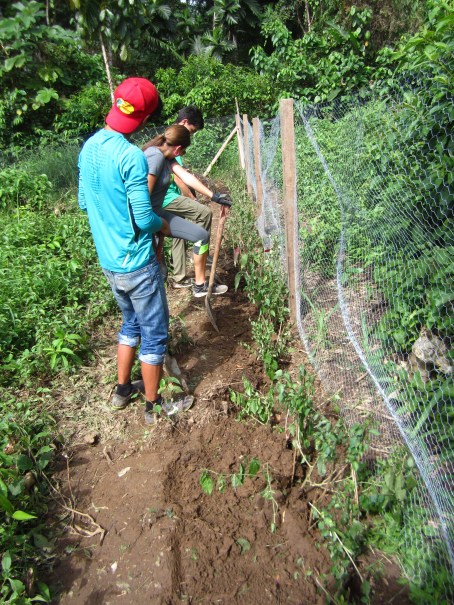
The biggest outcome of this week for me was the impressive and inspiring work achieved by the 7th grade group.  In the week prior to our visit the 9th grade class had been in this community starting and working on some projects.  The 7th grade continued their work in many areas and started a few of their own projects.
IMG_6142 2.JPG
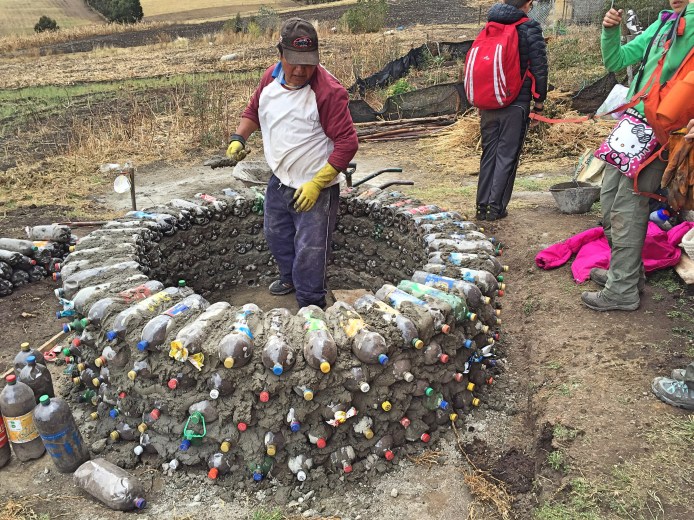
The first five rows of a 15 row water tank.  Each plastic bottle is filled with dirt to create a “brick”.  Foundation laid by 9th grade last week.

Over the course of the week we were able to see the fruits of our labor as the projects progressed.  Our students felt tremendously proud of the work they accomplished.


The main focus of our work was centered around the local school.  In this community they have a school of about 90 students from elementary school up through 10th grade.  The students in this school are from the surrounding villages and could be seen walking great distances to get to and from school each day.  The AC students were able to connect with these students as they joined the 45 minute school break each morning.  Playing soccer, basketball and joining conversations with the local students, our kids got to know the community members better.  The connections they established gave even more meaning to the work we were completing on their behalf.

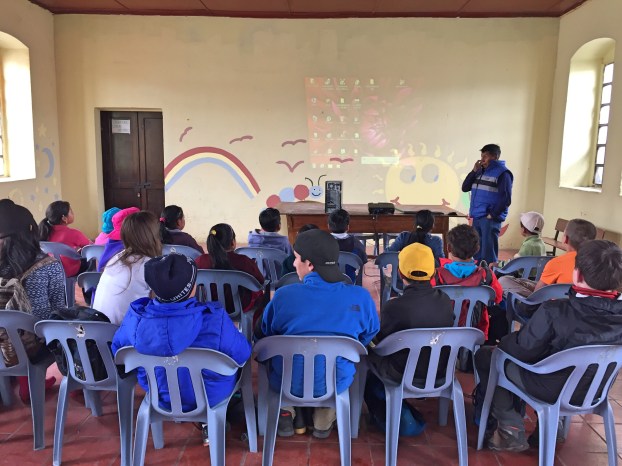
One of the highlights was the opportunity for our students to take part in a lesson with some local students.  The topic was about the use of pesticides and the harmful impact they can have on the agriculture and the environment.
IMG_6002.JPG
Classroom “theory” time before doing the “practical” in the garden.

After the lesson our students worked side by side in the garden with the local students to begin planting either potatoes or fava beans (habas).  Since this school is a rural school they’ve worked to establish a sizable organic garden for their students to learn the process and importance of farming.  Much of our service work involved this garden.  It was a unique experience and opportunity for our students to work in a meaningful and real context with the local students.


IMG_5978.JPG
Ernesto teaching us how to milk a cow and other fun facts about cows and their milk production.

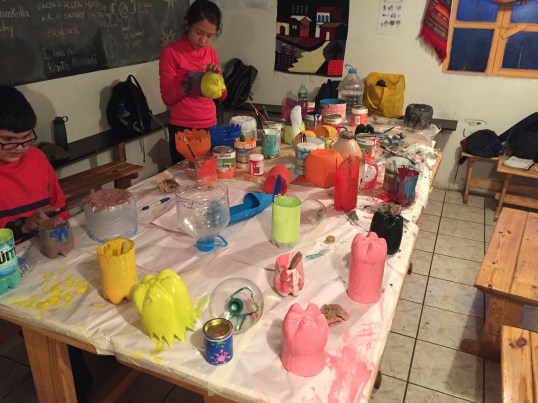
Aside from the wonderful service work completed by our kids we had a lot of other learning opportunities throughout the week.  Afternoon activities allowed the kids to learn to make tortillas from scratch, learn to milk a cow, and upcycle a plastic bottle into a “maceta” (a pot for plants).
IMG_6011.JPG
Maceta creation station led by our fantastic project leader, Karen.

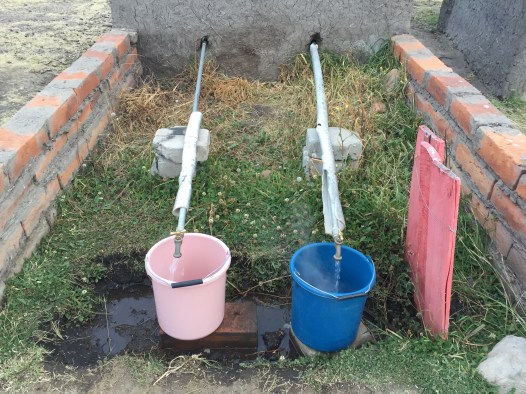
Each student participated in all of these activities and had the chance to come home with their maceta and a plant.  Other opportunities included learning to conserve water (a very valuable resource in this community) by taking a “bucket shower”,
IMG_5977.JPG
Buckets getting filled for our “showers”.  Hot water boils on the other side of that wall, each person gets about half a bucket of hot water and fills the rest with colder water.

working as a team to wash their own dishes and silverware, and sharing a bunk space with over 15 other classmates.  All in all, our 7th grade group had the opportunity for a lot of amazing takeaways from the week.


What I Learned at Kuri Kucho

While this was a tremendous learning experience for our students there were also some great takeaways for me too.  We worked hard during the day and enjoyed the afternoon and evening team building experiences.  The students learned countless lessons this week.  I too learned a few lessons of my own through this experience and also a few good reminders!

Last week I talked about how much I learned about my tolerance for rain.  This week, I learned just how valuable rain (and water in general) can be for a community.  San Pablo Urku lies in a very dry area and is currently in the midst of the dry season.  We were constantly reminded of this fact since they only have running water a couple days of the week.  Students (and teachers) had to deal with toilets that didn’t flush with the push of a button, an absence of traditional showers (they waste a lot of water), and dust and dirt all over everything.  While we were there we experienced a day of rain and could see first hand just how valuable that water was to the community.  Water collection tanks filled, plants and crops received much needed hydration, and the whole community smiled as we sheltered from the rain (they knew how important that water was!)  Water, the essence of life, is constantly on the minds of this community…something we take for granted everyday was put into a very different perspective at Camp Kuri Kucho.

Another good reminder of things that we take for granted was the importance of certain types of food.  I can walk out my front door and within two minutes be at a pizza place, a sushi joint, a noodles restaurant, or cevicheria.  In San Pablo Urku the staples are potatoes and fava beans.  Every meal includes one of these very filling foods that also provide an amount of protein to their diets.  Meat is rare and when included it is a treat.  Cuy (guinea pig) are raised by almost all members of the community, as well as chickens.  Cows provide milk,

IMG_5981.JPG
There were lots of sheep around San Pablo Urku.

sheep provide wool, but both exist as a rare delicacy as far as their meat is concerned.  The last night hamburgers and french fries on the menu, it struck me as to how foreign this menu must be for the local community…something so normal to me is completely foreign two hours down the road.

Wonderful Experience

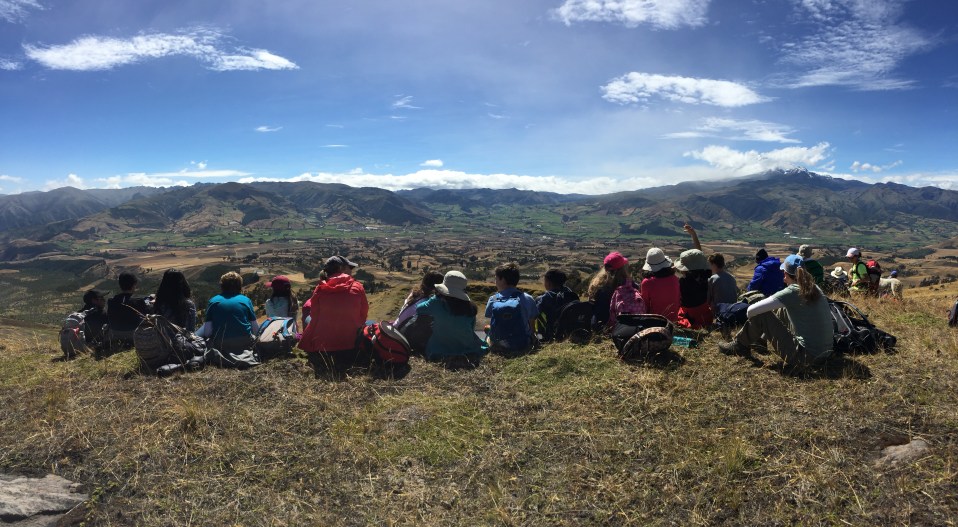
Waking up each morning to the sight of Cayambe looming over head was an absolute joy.  I didn’t let a chance to appreciate this beautiful sight ever pass me by.
IMG_6074.JPG
A hike with an amazing view as a reward, beautiful!

We had clear mornings each day and I even woke up one night at about 4:30 to see a full moon hovering just over the volcano…awesome!  Beyond the amazing scenery was the chance to take in a completely new experience with our students.  Visiting this community and working alongside the maestros to improve their garden and water tank was inspiring.  Community service is important for the people we help but perhaps even more important for the inspiration we can take away from the experience.  I feel very thankful to have enjoyed this trip with the 7th grade students.
 

Camp Amazonia

IMG_4320.jpg

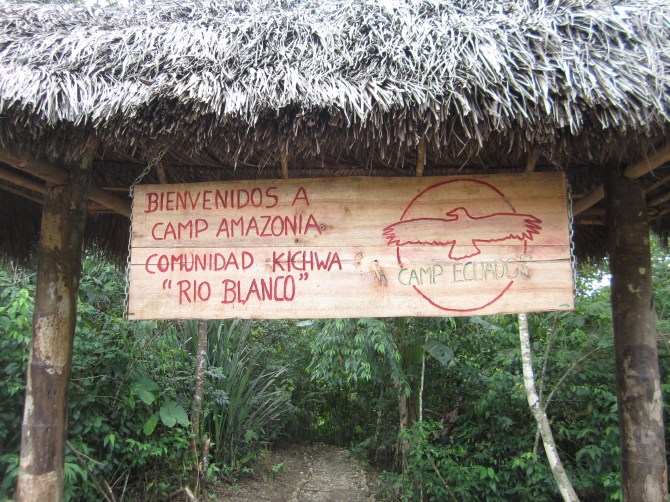
Last week I was lucky enough to join the 10th grade class on their trip to Camp Amazonia near the communities of Rio Blanco and San Alberto in the Amazon Jungle.  It was my tenth school trip in as many years and each has been unique in its own way.  This was my first time taking high school students on a trip and I can now say I’ve traveled for a week with every grade from 3-10 except 9th grade.  This trip included lots of hard work to help the local Kichwa communities, team building, cultural activities, and a trip to the Jumandi Caves.  At the end of the week everyone was exhausted but there was also an overwhelming sense of achievement!  

Awesomeness

Every time I take one of these trips there are wonderful examples of how amazing young adults can be when they are pushed out of their comfort zones.  This past week certainly did that, kids and adults alike were challenged in situations that went well beyond our everyday routines.  Right from the start we got right down to business with some hard work in the morning and then again after lunch.  We started the day in the rain and ended in fierce heat and sun.  Not only were we pushing ourselves hard to help these communities but the weather was pushing us as well.  However, by the end of the night everyone made it to dinner with a smile on their face and a sense of satisfaction in their hearts.  

IMG_4321.jpg
Working hard to create a botanical fence line.

The sense of community that develops over the course of a week like this is impressive to say the least.  Students who are struggling for one reason or another are picked up by their classmates without any teacher intervention.  Classmates who hadn’t really engaged with each other in the past can be seen walking, working, eating, and hanging out together.  New friendships are formed and old bonds are strengthened.  As important as community can be in international schools, trips like this are crucial!  

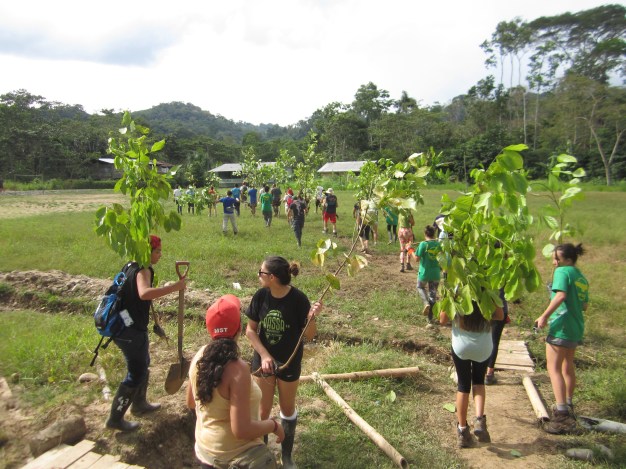
I’m not sure there are words to express how impressed I was with the efforts of the 10th grade group over the course of the week.  Through torrential rains, back breaking work, spiders and other critters, these kids stepped up in a huge way.  The work they did this

IMG_4440.jpg
Heading out to plant trees, helping to reforest a recently devastated area.

past week will benefit those communities for years to come.  Our students may never return to this area but their mark has been made, their efforts were not in vain.

What I Learned About Myself

While this was a tremendous learning experience for our students there were also some great takeaways for me too.  This trip was, by far, the most physically challenging of the school trips I’ve enjoyed.  I’m not shy about some hard work and I enjoyed every second of getting my hands dirty this week.  However, I learned a few lessons of my own through this experience.  

First off, I used to think that I would do pretty much anything to be out of the rain.  I HATE rain, or at least I used to think I did.  I mean, I’ve always loved a good thunderstorm but that’s conditional on me not being caught in the down pour.  In the Amazon, when it rains, it pours.  When it pours in the jungle there’s just no way to avoid it, no way to stay dry, get dry, or even remember what dry feels like!  However, it’s warm outside which makes being wet much more tolerable than I had ever realized.  In fact, by the time we got to Thursday and got stuck in yet another torrential downpour I was so used to the rain that I soaked it up and enjoyed every last drop.  I learned that I could manage being wet, even soaked with boots full of water!  

Another great reminder for me this week had to do with being prepared.  While I was prepared with all of the right materials and supplies, some of the kids weren’t.  Usually I pack extra and plan for this situation but for some reason I didn’t this week.  I gave up my gloves and came home with some blisters as trophies.  Not all of our kids had the proper footwear but thankfully Camps International had extra boots.  Finally, when it comes to being prepared in the jungle…bug spray is your best friend, I got lazy at the end of the week and my legs got eaten up!  Pack heavy and take extra gear, especially if you’re staying in cabins and not carrying it around all week.

Thankful

At the end of the week I feel extremely thankful that I was able to join this experience with our 10th graders.  We made a difference in that community, we learned about the Amazon, and we grew closer as a group.  Working alongside this inspirational group of young adults made me a better person and a better educator.  The best news is that I get one more week, this time with 7th grade…I can’t wait!!

IMG_4427.jpg
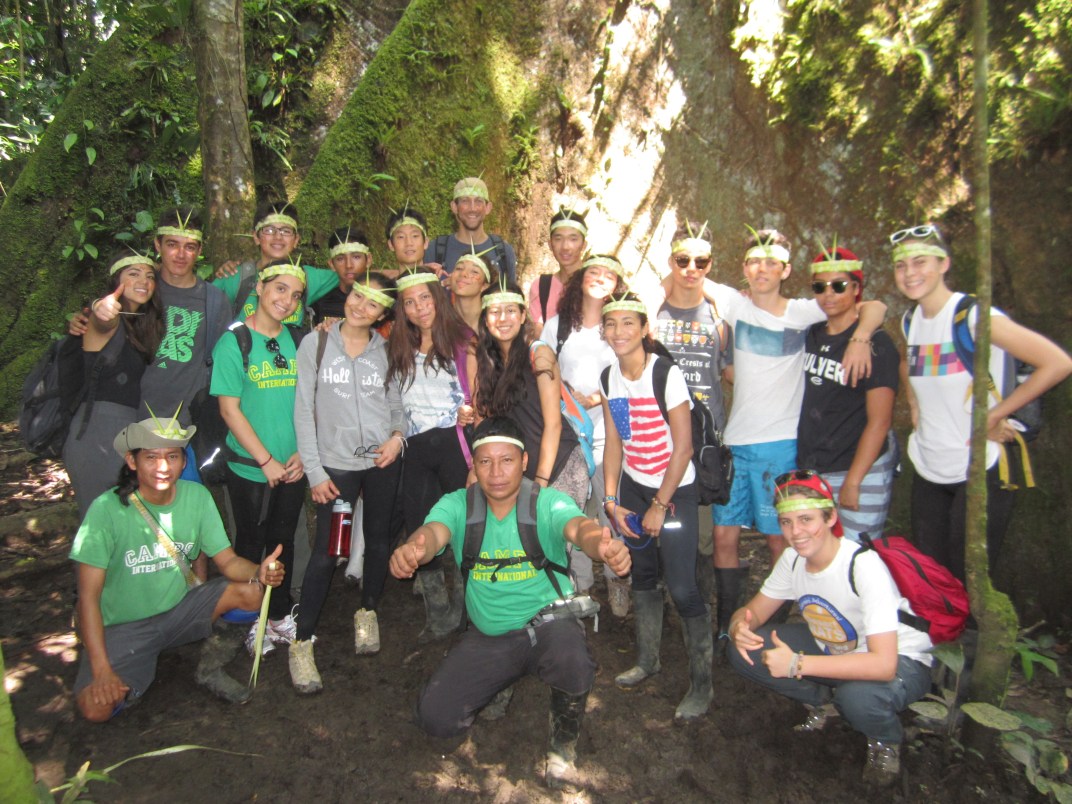
Hiking in the jungle, we stopped next to a 300 year old tree to learn how to create our own headwear.

Teenagers – Wild Animals

IMG_5524Last week Amy and I went to the coast to see Humpback Whales.  Just before we got on the boat our guide gave us the whole safety routine, then added one more piece that got me thinking.  Basically he said, these are wild animals and we never know what they’re going to do, we can’t predict their behavior so they may be jumping or we may not see anything, it’s nature.  

While we were motoring around looking for and watching whales I had a lot of time to think and I began connecting our guide’s warnings about wild animals to what we experience with teenagers on a regular basis.  Many outsiders, those NOT in education, view these lovely young adults as wild animals.  As I think about it, they’re not totally wrong!

Teens, the human variety, are capable of very high level thinking and processing.  They are empathetic, sympathetic, and very resilient.  Additionally, they are also full of hormones and are constantly changing.  In that regard they could be looked at much like the Humpback Whales I was hoping to see jumping all around me – wild and unpredictable.  

It would probably be a bit strange if I rallied all the teachers around each morning and reminded everyone about teenagers, “remember, these creatures are unpredictable…it’s nature, please be patient!”  However, it wouldn’t be untrue.  We’re dealing with some of the most diverse and rapidly changing brains in the world, no matter how well we think we know them nothing can be taken for granted.

The captain of our boat has been taking people on tours to watch whales for years now, he knows these waters and he has learned a lot about the movements of these massive mammals.  In an attempt to understand the wild, teenage minds that we encounter each day we work to establish positive relationships with our students.  By learning about their personalities we can better anticipate their learning styles and needs, much like the captain of our boat learning to anticipate the whales’ next move. We also have to remember that their brains are changing, each day may not guarantee the same interactions and behaviors as the last.

Keeping in mind that our kids are constantly changing is extremely important for the success of our young students.  Just as there will be days when the whales jump and there will be days when they don’t, the same can be said of our students – there will be good days and bad.  Also similar to the whales, we won’t ever know when these “jumping days” will happen for our students nor do we know when a bad day will strike.  The whales don’t jump every day but that doesn’t mean the captains don’t take tour groups out to sea in an effort to see them.  In the same spirit we must prepare to give every student the opportunity to “jump” each time we see them.

Creating the opportunity for kids to “jump” is what education is all about.  It won’t happen if they’re not comfortable and prepared, nor is it something we can force.  Each student is going to “jump” differently depending on a wide variety of factors.  Be ready for anything from these wild young minds, create the opportunity, and enjoy the show!  

The Educational Caravan

This past summer I was visiting a friend in Chicago, we had to drive from one place to another and he said, “just follow me”.  It was about 30 seconds later that he ran a yellow light and lost me in traffic.  I figured he would’ve pulled over and waited for me but as it turns out he was too caught up in a conversation to realize that I was stuck at the light.  Eventually he answered my phone call (thank you technology) and came back to find me parked on the side of the road, frustrated and annoyed.  The next day as I drove back to Wisconsin I started thinking about the similarities between this situation and education, I found a lot of connections!

I started realizing that being a member of a caravan, whether the leader or follower, was a lot like working in education.  We’re all educational leaders in one capacity or another, whether as the leader of a school, division, or classroom…we’re leading the caravan and in some cases we’re following as well.  To better understand caravans I needed to think about them in an educational context, while doing that I identified five key parts to successful caravan situations both on the road and in education.

  1. The Role of the Leader

When I was following my friend he had the implicit responsibility to make sure that I arrived at our destination.  He was supposed to lead the way and guide me to the final goal.  While the destination in this story wasn’t very important, we often find ourselves as leaders in education pursuing lofty and extremely important (for our students) goals.  

The leader of the caravan has the job of ensuring that everyone makes it to their goal! Thinking back to family caravan trips as a kid, I’m sure there are a few times when my parents would’ve preferred if one or two of the other families didn’t make it to the final destination but in education it doesn’t work that way!  Our students, teachers, or other community members are trusting us as the leaders of the pack to get them ALL to the final destination.  

  1.  The Route

As the leader of the caravan you have the responsibility for getting the entire group to the desired destination.  The route you choose, is often times up to you. There are a few factors to consider when choosing your route but there are no overarching rules that apply here.  Perhaps you or the group want to arrive as soon as possible, sometimes the safest route may be a little slower and but more desired.  You also have to consider avoiding road construction or other detours, potential headaches are often bypassed intentionally.

In education we work together, we collaborate to develop the best “route” to get our kids to the ultimate learning goals.  Sometimes we collaborate with other leaders in the journey and other times we work with everyone involved in the process.  Ideally we are working together to choose a path from the start and when we hit those obstacles along the way we come back together to make a collaborative decision about the best detour to take.  In either event, it is crucial that everyone has a solid understanding of what the destination will be and as much information about the route as possible.  

It is often said that the route isn’t important, that it is the destination that matters.  While this may be true as a generalized statement, when it comes to education the learning process is extremely important.  Choose your route carefully, collaborate with your colleagues, and work to lay the best path for those you’re leading.  

  1.  The Speed

Ever been in a caravan with a leader who likes to push the speed limit to the max?  How about someone who prefers to drive five miles below the speed limit?  It’s the “Goldilocks” paradox, too fast and too slow are no good, as leaders we have to be “just right” when it comes to pacing.  The larger the group the harder to find that sweet spot but it becomes even more essential with large groups.

  1.  Maneuvering Obstacles

When I got left behind at a stop light this summer I ended up lost because my leader wasn’t aware of the obstacle at hand.  His running of a yellow light forced me to decide, run a red or stop and wait.  As leaders in a school, whether leading students or teachers we have to be aware of the obstacles we face.  Do we rush the end of a lesson because the bell is going to ring and risk leaving someone stuck behind?  If we’re leading a school wide initiative, do we push on even if everyone isn’t on board just so we can implement the plan by a certain deadline?  How do we advance the whole group while also maneuvering through the wild obstacle course that is a school year?

One thing that is important to consider is that we (both leaders and followers) move at different speeds and encounter different obstacles in our learning.  Whether a disruptive home life, learning challenges, or a desire to move quickly through material, we’re all faced with different situations.  As the leader of the pack it’s important to keep this in mind.  Sometimes it’s okay if someone trails the group, as long as they remain in sight and can continue down the path at their own pace.  These people may need extra support.  That might take the form of Student Support Services, language acquisition assistance, or one-on-one support.  No matter what the obstacle there is surely a path to be followed.  Sometimes the trouble is just working to find that path and other times the challenge is overcoming multiple obstacles simultaneously.  Just as I mentioned when discussing the route, in education we work together as teams to help everyone succeed…especially those with multiple challenges or obstacles to arriving at the destination.

  1.  Watch Your Rear-View Mirror

As I sat waiting for my friend to come back and find me this summer I couldn’t fathom that he had just continued on and not noticed I wasn’t behind him.  However, as I mentioned earlier, he was too caught up in conversation to look in his mirror to check on me.  As the leader of the caravan it is your job to make sure everyone is still behind you.  On the road this means checking your mirrors regularly and verifying everyone’s presence.  Perhaps you even have a system set up so that everyone is responsible for the car behind them, thus creating a chain of accountability.  No matter the plan, it is important that everyone travels together and ends up at the same destination.  

In a leadership context a rear-view mirror isn’t the literal tool for checking on your followers but the fact remains that we must be sure that those we are leading stay with the group.  With a group of teachers moving toward an initiative you might form cohorts so that everyone is accountable to their small group.  Similarly in a classroom, small groups are often used to help students move forward with their learning collaboratively.  It is also possible for the leader to track their followers’ progress individually, a strategy perhaps more fit for smaller groups.  Whether by taking sole responsibility or sharing the task of monitoring the group, leaders must constantly check with their followers to ensure that everyone continues moving toward the final destination.  


The Road Ahead

This past summer I was left behind and felt lost.  I’ve been in the same place while working in school, both as a student and an educator.  During my two hour drive back to Wisconsin the similarities between these two scenarios really came clear for me.  Whether the leader or the follower, it is important to understand the dynamics of the caravan and the important similarities to the classroom and education.   

As educational leaders we’re all leading one caravan or another, and for many of us we’re busy leading multiple different caravans with different destinations.  Continuous movement forward is the main goal as we drive on toward the ultimate target.  However, we must keep in mind that we’re in this together…some people drive faster or slower, have less capable cars, or are just learning to drive.  No matter who is following it is imperative that we continue to consider everyone who is included in our caravan.  

Drive on 🙂

Exit Celebrations

As the year comes to a close it’s a time to celebrate the growth and success of our students and their learning.  I’ve seen absolutely amazing things from our students this year, they (and you) are clearly proud of the work they’ve done.  Throughout the year we do a lot of work to reflect and document with our students, I’d like to consider what we do at the end of the year to tie everything together.

Earlier in the year we had our Student Led Conferences, a beautiful way to celebrate growth and achievement for our students.  They sat with their parents and shared goals, work, and results.  There were hugs, high fives, and lots and lots of kinds words shared between students, parents, and teachers.  But that was so long ago already!  

Vicky Davis (@coolcatteacher) recently shared a great piece titled Exit Celebrating: 8 Epic Ideas for Ending the School Year.  Please take a couple minutes to look at this piece and think about how you can end the year in an epic way!  I know that time is tight right now but some of these ideas can be implemented with little to no time or effort.  

Just as we have brought our year to a close with end of the year conversations about professional goals, this is a great opportunity for our kids to do the same.  

Finally, I would like to celebrate all of the amazing colleagues I’ve been lucky enough to work with this school year.  Transitioning to a new school is never an easy thing.  However, coming to AC we couldn’t have walked into a more welcoming and open group of colleagues.  We were greeted with open arms and that hasn’t changed one bit.  From day one until now the amazing people who work at AC have been helpful, supportive, and positive influences in our lives.  What a tremendous group of people we have here leading the educational drive for success, it’s inspiring!

Thank you!!

Is Changing Culture Really the Answer?

I’ve written a lot about building culture and community recently.  Through some of the conversations I’ve had and articles that have been shared with me, I’m starting to wonder if “culture” itself is what needs fixing, or is there something larger?

My philosophy about developing a successful school environment has, for a long time, been based around the idea that “culture” is the most important ingredient and that focusing on building a positive culture will pay huge dividends.  In fact, my theory was reinforced at my past school when we focused hard on improving the culture of the school with very positive results.  It all made so much sense to me, build a strong culture with happy and engaged teachers, students, parents, and community members and everything will be better.  I guess when I simplify it that much it seems a bit silly to think that “culture” is the be all, end all.  

Reading an article from the Harvard Business Review (HBR) called Culture is Not the Culprit I’ve been forced to question my philosophy on “culture” as the main ingredient for success.  Despite the title of this article, the authors (Jay Loersch and Emily McTague) don’t write off culture as a non-issue but rather show how culture is a PIECE of the puzzle.  I think that I agree with the title of this article if it is read with the right emphasis.  For example, if you read it, “CULTURE is not the culprit”, then I don’t agree.  However, if read, “culture is not THE culprit” then I think we’re getting closer to what I’m starting to believe.  What I’m coming to understand is that “culture” itself is not “THE” culprit, in that it’s not the ONLY thing that needs to be addressed.  Rather there is much more to this puzzle than I had previously been examining.  

The authors of the HBR article are out to shock people with their title, for good reason.  They argue that too many major corporations blame “the culture” and try so hard to fix “culture” that they aren’t looking at the other important pieces necessary for improving/growing a company.  This hit home with me, hard.  I have been so focused on the idea of “culture” lately that I’ve essentially isolated it as THE area for improvement.  The reality is that it is only a part (I will still argue that it’s a big part) of what we need to focus on in order to improve as a school community.  

I mentioned my past experiences earlier and I want to share more about how we improved the school overall while focusing on culture.  See, the trick is, that while I’ve been focusing on culture so much I’ve almost forgotten all the other important things we were doing to improve the educational experience for our students.  The HBR article’s main point is that instead of focusing on culture, companies should focus on improving their business structure and how they can be better at what they do.  THEN, as companies improve and become more successful the culture will follow along with it and improve naturally.  In previous schools I’ve seen so much focus on culture that I think that is what gets all the credit for improvement.  However, if the authors of this article were to look at that situation from the outside they would suggest that it wasn’t the focus on improving culture but rather the focus on improving the educational experience that really affected change.  Which makes me ask myself a lot of questions and completely reconsider whether we should be spending time on building culture at all!

When I read articles from a source like the Harvard Business Review I have to remind myself that while schools can often times feel and operate like a business, our “client” base is very different from that of the traditional business.  This means that we need to focus our “product” in a very different way from what a traditional business might do.  So while culture might be something that can come along naturally as the business model improves and customer satisfaction grows, as a school we need to look at it differently.  In order to increase “customer” satisfaction as a school we need to not only focus on culture but we also need to remain focused on improving as educators.  If our “service” is education, then we need to continuously look at our practices as educators and find ways to improve.  

Apple is on version 9.3.2 of iOS, the original version was released June 29, 2007, almost nine years ago.  That means they have upgraded to a new version (on average) once every year.  What about education, when was the last time education upgraded to a new version?  When was the last time your teaching practice upgraded versions?  We’re all experienced educators and we’ve all attended numerous conferences, read books, taken masters classes, and done countless other things to help ourselves grow as educators.  I know that every one of us has improved, but by how much?  In “software versioning” each number means something different.  As I understand it (based on this wikipedia article) the “9” is the “major number” and means that a significant improvement has been made, something like changing the framework.  Continuing with this example, the “3” is a “minor number” implying minor modifications or features added, and lastly the “2” is a “revision number” meaning small bug fixes have been made.  When I think about education as a whole and try to use this system I wonder where we’ve made real change as a profession.  Are we still on version 2.0, maybe 3.0?  We’re most certainly not updating our entire framework every year like iOS, nor do I think we should be.  However, when you think about your educational practice I’d like to ask you to think about what kind of upgrades you’ve made during your career.  Have they been “major”, “minor”, or “revision”?  

Next year we are working to make big changes to the culture at AC.  I’m not sure if I would go so far as to say that we’re changing the entire framework but I think we’re going to be close.  Adding a House System while improving the handbook, assessment manual, and reporting practices along with establishing clear and effective communication tools, are all changes we’re excited about for next year.  Together I think these improvements will go a long way toward helping us reach our goal of improving culture.  However, when I look at these things individually I realize that they’re not all “culture” pieces by themselves.  It’s not until taken together that they become a huge shift in “culture” at AC.  

Culture isn’t the ONLY thing that needs to change, nor is it the magic pill that will automatically improve everything within a school.  Culture is a (big) piece of the overall puzzle.  It is something that we need to build around and use as the focal point of our growth.  Working to  improve our educational practices, while building a positive and caring culture, will lead to rapid growth both in our teachers and, most important, in our students!

Positive Notes Home

We’re in the home stretch, three weeks until summer break, wow!  I keep thinking about our school culture and I’ve been reading even more about it as people share amazing articles, links, and books with me (thank you!)  I will keep it short this week because I think it would be really valuable if you went to this link and read a great blog post that was shared with me.  I’ve written about ideas for improving school culture the last two weeks and the theme hasn’t died down in my mind, I’ve come to the conclusion that it’s not going anywhere!  

Last week I brought up the idea of positive notes home.  The author of the post I shared above makes a great case for dipping your toe into the waters, it’s not a huge time commitment but the power of those notes IS huge!!  As an example, one of our colleagues came to me this week to show me an email he received.  He wasn’t trying to brag about his child but rather was sharing it with me to help confirm my theory.  It was a glowing email about his child’s performance in class and the way it made him feel, as a parent, was exactly the kind of feeling I believe we need to start fostering in this community.  He was proud of his child and happy about the growth shown academically but along with those feelings he was thankful toward the teacher for sharing.  This is what I’m after, that parental feeling of positivity and thankfulness for us (the teachers!)

We need to bring parents to the table.  They need to be more a part of the school community than they are now (as a generalization).  By communicating regularly, and not just for “negative” reasons, we will begin to forge a connection that we can draw upon to help get them more involved in their child’s education as well as the school community.

As I said, I’ll keep it short this week.  PLEASE give it a try, send a few positive notes home and see what comes back!!

Pushing Forward with School Culture

Last week I wrote about school culture and how it is, perhaps, the single most important piece to achieving the academic success that we strive for in education.  I’ve continued thinking about the importance of shaping a school’s culture and have had a lot of conversations and feedback based on last week’s post (thank you to everyone for your thoughts!)  As a result of all these conversations I decided to start trying (and modeling) a few strategies that I thought could be beneficial to further engage our student and parent populations.  I’ve found a high level of success at the initial level and I’m excited about some of the feedback I’ve received from parents and students alike.

In the past I’ve written about the importance of feedback and how giving and receiving feedback are things that people need to practice.  Similarly, I read Thanks For the Feedback a while back, upon Dan’s recommendation, and have been thinking a lot about the concept of learning to receive feedback.  There are a lot of factors at play when receiving feedback, which is what we’re asking our students and parents to do as part of the process of further engaging with academics.  One of the most impactful ideas is that people need to be in the right mindset when receiving feedback, otherwise it may fall on deaf ears and be ignored.  

One challenge that exists when sharing feedback with students and parents is that all too often we only make time to share the “negative” feedback, the stuff intended to help our students improve and grow.  This is essential information and must be shared with students and parents, but it’s not the only piece.  Balance is an important part of life, in all aspects, and when it comes to feedback there is no difference.  In order to reach a level of balance in student/parent communication that will act to further engage these stakeholders we have to ensure that we aren’t solely focused on the “negative.”  If we only contact parents about “negative” issues or approach students with “negative” feedback they will begin to block us out and our feedback will be completely lost.  

Which brings me to my idea, one of a few I’ve been trying out lately…and seeing incredible results!  Positive messages home.  I’m not making things up just to have an excuse to contact parents and celebrate their kids.  Rather, I’m looking for the positive and taking the time to share the celebration with students and parents.  Meanwhile, I continue to make my usual parent contacts for less desirable reasons (detentions, missing work, etc.)  What I’ve noticed is that when I copy (CC) parents on these messages to the students (I always do this), I’m receiving a response from the parents 85% of the time when I share a positive message, compared to an approximate 20% response rate for “negative” messages.  One of my (many) theories is that as we engage more parents with positive messages that our response rate on “negative” messages will increase.  It’s only natural, that as parents begin to see that we’re in this together, that they’ll begin to engage further with their students academic pursuits.  When I have kids come up and thank me for sharing a positive message with their parents I know that they’ve had a conversation around this topic.  My hope is that we can find a way to help parents open the lines of communication by starting with the positive, then when the “negative” arises they’ve already established a path for having these conversations.

It takes a village to raise a child and we’re all in this together.  After a few conversations around this topic, some teachers have already jumped on the bandwagon and have begun to share more frequent (both positive and “negative”) messages home, with wonderful results.  If you’re keen to help continue this surge toward a more positive school culture I encourage you to give this a try.  Let me know if you’re thinking about it and I can give you some time-saving tips to help prevent spinning your wheels unnecessarily.  There’s no better time than the present to celebrate the wonderful students we are fortunate enough to work with every day, you never know when that one positive note home is going to change something for a student or parent!  

Starting with Culture

I’ve recently been thinking a lot about the culture of our school.  Having been in four previous schools in various places around the world I’ve been a member of a variety of different school communities.  Some have been naturally very positive and others have required a lot of time and effort in order to reach a comfortable level.  However, the one thing that holds true in all of these schools is the importance of creating a community centered around the school.  I believe that means that every stakeholder must be appropriately involved in the educational process, we can’t reach a point where we are ever comfortable with leaving any particular group of people out of the learning community.

Throughout this first year at AC I’ve watched, listened, and felt the pain of teachers as we’ve banged our head against the wall trying to engage students and parents in the learning process.  We have a lot of amazing students and families here at AC.  However, there are also a large number of students and families who are disengaged and, at times, completely oblivious to the reality of the expectations for learning.  I don’t mean to make a sweeping generalization, as that wouldn’t be fair to all of those students and families who are integral parts of our community.  I know that we, as educators, haven’t given up on a single one of these students or families and we work extremely hard to engage them.  What I’m worried about right now is the possibility that we’ve given up on some of the parents, maybe even written them off as completely disengaged.

There is a lot of evidence to support the theory that students whose parents are more involved in the school community do better academically.  This is powerful stuff, especially when you look at our attendance at parent nights or PTO meetings.  Where are all of our students’ parents?  As I’ve settled in at AC I’ve had the chance to sit back, observe, and ponder questions such as that.  There is one thing that keeps boiling to the top as I contemplate our community; I’m concerned that we haven’t done enough of the “right” things to engage our parents.  There is no doubt in my mind that we’ve tried a lot of strategies to engage our AC families but what I think has become obvious is that we’ve yet to find the “right” or most successful strategies.  

Not to be lost in this conversation are the kids, what impact has this had on their learning?  Well, as I mentioned above, there is a lot of research to support the theory that students whose parents are involved in the school community achieve more academically.  That is very important to consider as we ponder, as a school, how to best help our students grow as learners.  So, let’s think about that for a second…which of your students struggle the most to engage with the learning process here at AC?  How involved are their parents?  Next, and what I want you to consider as the most important question, what have you done to further engage those parents in their student’s learning?  Have those strategies worked?

We need to come together over a common understanding of what it means to engage our full community.  As I said earlier, I’ve spent a lot of time thinking about this lately and I’ve also had a number of conversations with different teachers, parents, and students.  Let’s work as a team to bring this entire community together around one common theme, student learning!  I’d love to hear your thoughts, concerns, and strategies to further engage the different parts of our AC community…please share!

Surrounded by Feedback

This past week I had the chance to get into a 5th grade classroom and a 7th grade classroom to work with some students on our iLEARN Communities.  Dan and I are working to bring the PLC (professional learning community) structure to the student level.  We want our students working to Lead, Engage, Assess, Reflect, and Network (LEARN).  As part of this process we approached the two grade levels a bit differently to initiate the process.  What was most interesting to note after reflecting on these two sessions were the similarities and differences.  The most important of which, is the fact that both groups identified “feedback” as one of the most important ideas to be successful within this process.  

Our approach with the 7th grade students was to start with a discussion around “How the Brain Works” and getting them to think about collaboration as an important concept for success.  As we introduced this group to the iLEARN Communities concept, they independently brought up the importance of feedback in all aspects of their learning.  This was exciting for a number of reasons.  For students to realize that feedback plays a role in all aspects of their learning was very powerful because it couldn’t be more true.  In fact, we had an article to share with them all about the importance of feedback.  It was exciting that they were already leading themselves down this path before we led them there.  

The 5th grade group also started leading themselves down the path we had hoped they’d follow.  We started with this group using a different strategy.  They’re deep into their Exhibition of Learning (EOL), the culminating piece of their years in the PYP.  Instead of starting with brain research we decided to try to unify the iLEARN Communities work with their EOL.  After discussing with a small group of 5th graders I was excited to hear them using the word feedback so frequently.  I asked them why they thought feedback was so important, or at least why they kept bringing it up.  I’m paraphrasing but essentially they said, “feedback helps us grow and get better.”  Talk about exciting, these kids were begging for feedback and couldn’t get enough!

I guess feedback is on my mind even more than usual because we’re heading toward the end of another school year.  We’ve begun scheduling end of the year conversations with teachers, a process that includes giving and receiving feedback for all parties.  I’ll be seeking feedback from teachers about the supervision process and perhaps more importantly I’ll ask for feedback on my feedback.  As a part of this process I’ll also be drawing together a year’s worth of feedback into one conversation with an aim toward planning for future success.  It’s an exciting time for me, I believe that the process of reflecting and celebrating growth is hugely beneficial to the learning process.  As the lead learners in this (or any) school, it’s imperative for us as educators to go through the same process we want our kids to go through.

Our students are on the way, they’re thirsting for feedback and see it as extremely valuable.  I know that teachers are, literally, begging for more feedback to help them grow and improve.  It is my goal to provide these opportunities for feedback to our teachers as frequently as possible.  I believe that as an admin team we did an acceptable job of providing feedback this year BUT I see a lot of room for improvement.  I’d like to ask a question, and I’ll ask the same question to those teachers I meet with at the end of the year…what can you do to improve the feedback process with your students?  

Answering this question honestly and implementing those changes will, guaranteed, improve the level of success in any classroom.