Finding a Place for the “Soft Skills”

The “hard skills”.  Math, Language…the Sciences.  These are the things we teach our students, the things they “must” know to get to university, to pass the test, to graduate.  But what about the “soft skills”?  Compassion, perseverance, teamwork, confidence and other social-emotional skills; these are crucial to their success, not only in the long term, but in the short term (to get to university, to pass the test, to graduate!)  

Time.  Time is extremely valuable.  With only about 60-65 thousand minutes in the school year it feels like a bit of an indulgence (perhaps some would say a waste) to take class time to teach things that aren’t actually “on the test” or “in the book”.  I’m willing to challenge that theory though, I believe it is a valuable use of time to ensure that our students receive a balanced education that includes both “hard” and “soft” skills.  The imbalance, one without the other, will lead to imbalanced students who find success in the “hard”, academic skills as difficult.  

If you can take 5-10 minutes now to save you hours later, wouldn’t that be a time investment worth making?  That’s what I’m proposing.  Investing some time to teach students these “soft skills” within the context of your classroom will lead to payoffs down the line.  Less anxious students, organized teenagers, compassionate young adults, and “gritty” learners.  These are the results of teaching and learning the “soft skills”, these should be goals in all classrooms.  

Here are a few areas of focus that will pay dividends for you, should you invest the time:

Start with a Goal:  All of our students have set goals and will revisit these goals in the second semester.  But, how easy is it for these young minds to set their goal and forget it for four months?  Pretty easy.  Take a couple minutes to have students set a goal at the beginning of each class and write it down.  This goal should only be for the next hour or so, just until your class is over.  At the end of class, allow time for students to stop and reflect (and maybe share) on whether they achieved their goal.  I’d recommend having students write a goal on one side of a notecard, then reflecting on the back side.  You can collect these and gain valuable insight, while also holding kids accountable to the process.  

These goals might look like:  “I want to clarify my understanding of the Pythagorean Theorem.”  “Today I will help my classmate practice their scales on the saxophone.”  “Today I will receive feedback on my essay from two peers and my teacher.”

Organize (papers, thinking, lives!):  How do your students organize for your class…is it working?  Many of us use Edmodo.  It’s a great tool for some elements of our classes but does this tool work for everything or just parts of what you’re trying to accomplish.  Would your students benefit from a different organizational system for your class?  What about student thinking?  Graphic organizers, anchor posters, word walls…all of these things are easy and benefit all learners.  How can you help your students get organized?

Mindfulness:  A huge trend in education these days, if you have a lot of Facebook teacher friends you’ve surely at least seen something about Mindfulness.  It can help adolescents more easily navigate the craziness of growing up.  Building skill sets in concentration and impulse control, cultivating empathy and generally helping students become more mindful will all lead to healthier students.  So what is “mindfulness”?  The short explanation is: purposeful and non judgmental awareness of the present, being in the now.  The second part here is key.  Especially with our teens.  They need to understand that they are not constantly being judged, that taking risks and making mistakes is not only okay but expected.  Anxiety is about the future, our worries about all the things that could go wrong if something happens.  Being mindful means that you’re in the moment, you’re in the present and aware.  Mindfulness meditation exercises help focus the mind on the present and get kids ready for the task at hand.

It doesn’t take much, 5 minutes at the beginning of class is all it takes.  Give it a try for yourself first, then give it a try with your students.  I think you’ll enjoy it in both contexts.

Try this basic mindfulness meditation (only 5 minutes).

Then, investigate HeadSpace a little bit.  They have a free trial that is worth the effort and if you see the value there are other options.  Beyond HeadSpace there are lots of other options, if you’re keen let me know and I can share.  

Trying these strategies with your kids is a time investment worth making.  Budget yourself 5-10 minutes over the next few classes to give them a try, you won’t regret it!

[Update] This article was shared with me today.  It’s a great piece from the Wall Street Journal called What Teens Need Most From Their Parents.  It’s all about the soft skills and how tweens/teens develop through the years.  A great read for parents and educators alike!
Look, Find, Enjoy…Smile

At the risk of sounding too much like Martin Luther King Jr., I had a dream this week.  That’s not in and of itself too amazing but I don’t normally remember my dreams.  This one, however, I HAD to remember.  In fact, I woke up in the middle of the night and made a very concerted effort to remember what had happened in my dream:

I was walking around in a crowded area, where everyone was visibly down and depressed.  They were all telling “their story” but each and every story was a lamentation of all the hard and tough things in their life.  It was a sad place to be, no one was happy and I can remember having a feeling of being “sucked into” the sadness.  

But then…I’m not sure where he came from, but a man arrived.  He was playing music, basically a one man band.  I can’t visualize the details of what he looked like any more but I distinctly recall comparing him to Bert (Dick Van Dyke’s character in Mary Poppins).  Anyway, this man came into the crowded area and began to offer storytelling services to people.  When he started telling these people’s stories for them, however, the mood immediately began to change.  They weren’t sad stories any longer but rather positive, uplifting versions of “their story” that focused on the happy times instead of the sad.  People were happy and the overall mood of the crowd did a complete 180, it was now festive and positive.

And then I woke up.  It was the middle of the night but I forced myself to lay there and contemplate this dream for a while.  Don’t get me wrong, I’m not much of a dream analyst, but this dream hit me hard for some reason.  As I lay there trying to remember this dream and figure out what it all might have meant, it struck me just how inspirational this man was.  He looked not at the sadness and despair but rather at the good and positive inside of people.  The same lives went from sad to happy just by changing the focus.

I don’t know where this dream came from and I can promise you I haven’t seen Mary Poppins in a very long time (although I think I need to go back and watch it now, classic!) so I don’t think this dream came from a subconscious desire to watch a movie from 1964.  

I do know this though, it’s been a very long first semester and we’ve certainly experienced some major ups and downs.  For many of us it is easier to focus on the negative, especially when we are tired and worn down.  I’ve got a feeling that something deep inside my mind was trying to remind me that focusing on the positive is the key to happiness and success.  

As our students hit a high stress period of deadlines, exams, and overall fatigue we need to remember that, not only for ourselves but for them too, positivity is powerful.  If you haven’t watched the video from the link above I recommend doing so now.  While you’re at it, if you have the time, perhaps the best part of the movie:  Step in Time. (A great reminder that ANYONE can have fun, even at their job!!)

Bring the positivity, look for it if it isn’t there, I promise in a room full of teenagers there is at least a little bit lying around…and when in doubt, smile 🙂

Practicing Gratitude

This next week is American Thanksgiving.  In preparing for the week and starting to think about what Thanksgiving really means, I’ve been reading a lot about gratitude and why it is so important in our (and our students’) lives.  

“Having a sense of purpose in life gives youth a compass for creating a meaningful life. As adults, it’s our job to help kids discover their passions and to find a path to purpose that resonates with them— with their values, interests, and dreams. This starts with feeding their interests in the social issues they care about and pushing them to learn as much as they can about those issues and discover ways they can make a difference. The deepest sense of gratitude in life comes from connecting to a bigger picture, to an issue that matters to others and doing things that contribute to society down the road.

Trying to make grateful kids isn’t just an issue for families; it’s an issue for society as well. Society desperately needs to harness the power of gratitude. As our world becomes more culturally diverse and digitally connected, and as complex societal problems mount, gratitude may help catalyze the motivation and skills youth need to succeed not just academically but in the ‘life test’ too. We must all do our part to help kids develop into moral adults, who will contribute to a world of compassion and care. But, while there’s no quick fix for cultivating gratitude in young people, the more we remain committed to it, the more rewards we’ll reap. Indeed, by bringing out the best in our kids, we can only imagine what blessings Generation Grateful could bring. Anything worthwhile takes a lot of time and effort. It’s up to all of us to make it happen.”

I couldn’t have said it better myself, so I decided to let the Great Good Science Center say it for me.  This quote comes from an article on their site called Seven Ways to Foster Gratitude in Kids.  

As we come down the homestretch of this first half of the year it is easy to get caught up in rushing toward that December holiday; it’s understandable with High School exams coming up, end of the semester projects looming, and the beach, family, or other travels just four weeks away 🙂  

Take some time this week (and every week!) to stop and reflect for yourself.  Gratitude isn’t just something for the kids, it is important for everyone.  There is a lot of research that shows that “very happy people” are happy because of their ability to be grateful for what they have around them.  Whether it’s the relationships they build, through practicing “radical gratitude”, or just because they are happy at their job, gratitude surrounds each of us, we just need to stop and smell the flowers once in awhile!  

Enjoy the week and Thank You for all that you do!!!

Being Good for Each Other

It has been a very busy couple of weeks and lots has happened, both here on campus and around the world, that has made many of us ask questions like, “where is the good in the world?”  

Whether in an assembly, at a Rainbow Club meeting or in America, many people (no matter which side of the debate they happen to be on) have been forced to question themselves, people the respect, and possibly even an entire country.  It’s not been easy.  

No matter whether you agree or not with the Rainbow Club, Donald Trump, Hillary Clinton, or off-color remarks in an assembly, there are people on the other side of the conversation.  Some of these people might be your friends and family, perhaps not.  In either case, they are people.  Kid President is a person too 🙂  Back in September he shared another of his many inspiring videos, this one was about How to Disagree with People.  I’m going to let you watch this one, it’s worth it!  

So we’ve disagreed, and that’s okay.  Everyone is different and that is a good thing.  One thing we can all focus on, no matter which side of the aisle we sit on during these disagreements, is how we make the world a better place.  No one is expected to change the entire world, but we can all have a positive impact in our small little corner of the world.  Since he’s on a roll (of more than four years now) let’s defer to Kid President one more time for a lesson on How Good Spreads.  

Be good for our kids, be good for each other, and be good for yourself!  

Burning Burnout

This week I was inspired by a couple articles that I came across on social media.  I find articles all over the internet, sometimes on social media, sometimes by reading educational blogs, and other times from regular email lists I’ve subscribed to.  Both of the articles that have inspired me this week come at a very poignant time for me and many of our colleagues.  

The first article that caught my eye is from Harvard Business Review and is written with managers (aren’t all educators managers?) in mind, the topic is burnout and how to avoid it in a hectic and go-go work place.  We’ve been going full-steam ahead for the better part of the last three months and everyone is more than ready for the upcoming holiday.  I’ve written about balance and how important it is to achieve at least a semblance of equilibrium in our lives.  This article does a tremendous job of identifying some of the most important warning signs as well as prevention methods for burnout.  


  • Prioritize Self-Care:


      • Good sleep habits
      • Nutrition
      • Exercise
      • Social connections
      • “Practices that promote equanimity and well being”


  • Shift Your Perspective:


      • I believe that the second article this week really shares a very important and interesting perspective on teaching.  The article, “My Name Is Tom. I’ve Been a Teacher for 10 Years and I Still Get My Ass Kicked Nearly Every Day”, is an outstanding piece about maintaining a growth mindset perspective as a teacher.
      • As Tom (from the article above) says, “The struggle isn’t just inevitable, it’s important. It shows us where to get better, where to adapt, where to throw out the old answers and come up with some new ones.”


  • Reduce exposure to job-stressors:


      • Be a professional, not a servant.
      • Set reasonable boundaries for yourself.
      • Give yourself permission to stop.


  • Seek Out Connections:


    • This is perhaps the best antidote to burnout…
    • Find rich personal connections.
    • Pursue meaningful personal and professional development.
    • Remember:  You’re not the only one!  

As Tom mentions, the struggle is real!  Remember, one of the most important pieces from above, we’re all in a similar position.  Reach out to your colleagues, make those connections and be good for each other 🙂

Inspired Learners Growing from Inquiry

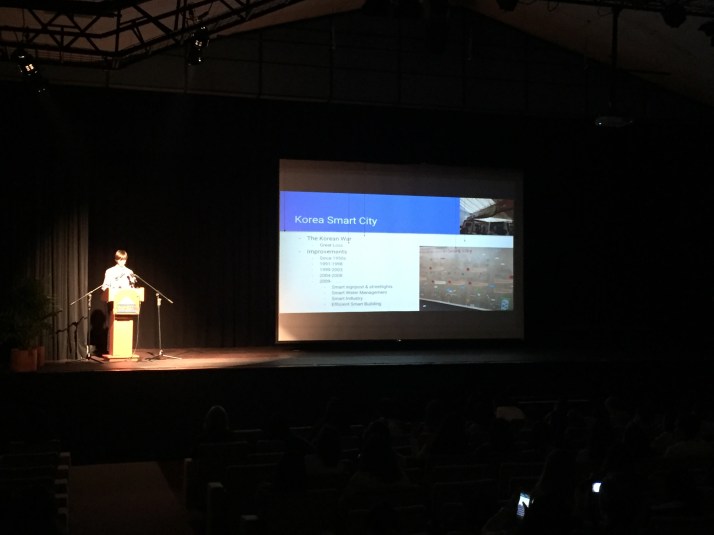
This week we’ve hosted the regional GIN conference and it couldn’t be more inspiring!  Seeing our students come together with over 80 kids from the region to explore, teach, and learn about different issues has sent a jolt of energy through the campus.  Exploring topics such as Carbon Footprints, Korean Smart Cities, and Socially Responsible Enterprises, these globally-minded advocates are working to create a better future for themselves and generations to come.  The best part of all of this learning…it’s all optional and totally voluntary!  IMG_6414.JPG

Global Issues Network is not a mandatory class, it is not a requirement, and it is not an obligation.  The students have chosen to get involved with these projects and dive into the process of making change because they are interested and dedicated.  They are digging deep to learn everything they can about certain topics; spending time researching, sharing, and then working for change because they are curious and caring.  The curiosity that our students have about these topics combined with the permission to be inquirers and ask questions has created a situation ideal for exploration…and they’re learning at an amazing rate!  

As I’ve discussed in the past, curiosity may have killed the cat, but thankfully we’re not cats!  Curiosity is considered by many to be a character “strength” (or “trait” depending which research you’re reading) that has a strong effect on learning.  Students who have a strong natural penchant to be curious and students who’ve learned to be curious both have a higher academic success rate than students who lack curiosity.  Those students who demonstrate IMG_6405.JPGcuriosity about a topic also tend to receive more attention from their teachers, potentially worsening the challenge for those students who may already be struggling in a particular subject.  All of this naturally begs the question, if curiosity is important and some kids aren’t “curiosity-inclined” then what can we do as educators to foster their interest in a subject?

Good question, glad you asked 🙂

In the lower grades our students have no homework except to pursue their passions and bring what they’ve learned to school in order to share with their peers.  These “passion projects” have sparked an interest in learning that previously may not have burned so brightly.  The smiles on the faces of these students as they pass by in the morning with their passion projects in hand is infectious, they are excited and proud of their learning.  What, however, are they learning?  Well, I’ve seen kids code their own video games, complete full research projects about crocodiles, and construct working volcanos out of chocolate and marshmallows (a couple different skills there!)  Just like our older students’ interest in Global Issues, these projects have been completely voluntary and self-directed.  These students are learning because they want to and because they enjoy the opportunity.

As our students grow older we tend to focus on the content that we “have to teach” and worry less about what the kids are actually interested in learning.  What about something like the Innovation Academy (IA) though?  As a number of us learned on our visit to the FDR school last year, this is a real thing and the students who are graduating from this program are doing so with an incredible range of skills.  The inclusion of inquiry in our academic programs need not be as drastic as creating a completely different track such as the IA has done, we can do this in a much more manageable and “bite-sized” way.  

Now, as I recently wrote, we need to give ourselves permission to stop.  I am certainly not asking you to do more.  What I am asking you to do is to stop and take a few minutes to reflect about your next unit or perhaps one that is still a couple units down the road.  Next, evaluate the priorities for learning and consider where student engagement in the material falls on that scale.  Where can you add opportunities for inquiry and exploring curiosities into the learning?  Would doing this increase student engagement?  Perhaps this looks like students choosing a character in Romeo and Juliet, comparing them to a real world person/celebrity, and developing a way to share their comparison with their classmates.  Maybe in Science class they can apply an equation or scientific process to a real world situation and create a simulation to share with their peers.  Student-driven doesn’t have to mean only student-driven, provide them with the guidelines and allow them the choice of inquiry within those guidelines.  Our students have passions, they’re human after all, let’s encourage them explore those passions and at the same time give them a glimpse into the real-world application of their school work.  

“What, of course, we want in a university is for people to learn the skills they’re going to need outside the classroom. So, having a system that had more emphasis on inquiry and exploration but also on learning and practicing specific skills would fit much better with how we know people learn.” – Alison Gopnik (professor of psychology and philosophy at UC-Berkeley)

“A subtle thought that is in error may yet give rise to fruitful inquiry that can establish truths of great value.” – Isaac Asimov (author and scientist)

“Educationists should build the capacities of the spirit of inquiry, creativity, entrepreneurial and moral leadership among students and become their role model.” – A. P. J. Abdul Kalam (former president of India)


Celebrating What we Value Most

It is often said, “we celebrate the things we value most.”  Well, I want to celebrate you…the teachers and leaders of our students.  

Long hours, endless frustrations, and countless sacrifices.  Fighting off colds, exhaustion, and 9 weeks of wear and tear.  Diagnosing, teaching, assessing, re-teaching, and re-assessing.  Teenagers, their parents, and all the hormones.

Success, the glimmer of hope, and the celebratory emails home.  The amazing lesson, the excitement of learning, and the joy in their eyes.  The growth, the pride, and the sense of achievement.  Smiles, laughs, hugs, and high-fives.

Students are both the greatest and the toughest part of this job.  They are the challenge and the reward all at once.  Yet, rarely, do they stop to say thank you and show their appreciation.  BUT…it’s there, I promise.  From the conversations I have in the halls and at lunch to the messages from parents.  Our students appreciate their teachers and this school.  The smiles and overall feeling of happiness that runs rampant throughout our school community is the most telling sign.  Our kids enjoy AC and they appreciate the work you do on their behalf.

What do teachers make anyway?

Well, if you haven’t seen this before you should see it now (I apologize for the occasional bad word)…and THANK YOU!!!!

What Teachers Make
by Taylor Mali

He says the problem with teachers is
What’s a kid going to learn
from someone who decided his best option in life
was to become a teacher?

He reminds the other dinner guests that it’s true
what they say about teachers:
Those who can, do; those who can’t, teach.
I decide to bite my tongue instead of his
and resist the temptation to remind the dinner guests
that it’s also true what they say about lawyers.
Because we’re eating, after all, and this is polite conversation.

I mean, you’re a teacher, Taylor.
Be honest. What do you make?

And I wish he hadn’t done that— asked me to be honest—
because, you see, I have this policy about honesty and ass-­‐kicking:
if you ask for it, then I have to let you have it.
You want to know what I make?
I make kids work harder than they ever thought they could.
I can make a C+ feel like a Congressional Medal of Honor
and an A-­‐ feel like a slap in the face.
How dare you waste my time
with anything less than your very best.

I make kids sit through 40 minutes of study hall
in absolute silence. No, you may not work in groups.
No, you may not ask a question.
Why won’t I let you go to the bathroom?
Because you’re bored.
And you don’t really have to go to the bathroom, do you?

I make parents tremble in fear when I call home:
Hi. This is Mr. Mali. I hope I haven’t called at a bad time,
I just wanted to talk to you about something your son said today.
To the biggest bully in the grade, he said,
“Leave the kid alone. I still cry sometimes, don’t you?
It’s no big deal.”
And that was noblest act of courage I have ever seen.

I make parents see their children for who they are
and what they can be.

You want to know what I make? I make kids wonder,
I make them question.
I make them criticize.
I make them apologize and mean it.
I make them write.
I make them read, read, read.
I make them spell definitely beautiful, definitely beautiful, definitely beautiful
over and over and over again until they will never misspell
either one of those words again.
I make them show all their work in math
and hide it on their final drafts in English.
I make them understand that if you’ve got this,
then you follow this,
and if someone ever tries to judge you
by what you make, you give them this.

Here, let me break it down for you, so you know what I say is true:
Teachers make a goddamn difference! Now what about you?

Thank you Taylor Mali for his inspiration and permission to use his work to inspire!

Mali. Taylor. “What Teachers Make.” What Learning Leaves. Newtown, CT: Hanover Press, 2002. Print. (ISBN: 1-­‐887012-­‐17-­‐6)

Starting Today for a New Ending

I love quotes, I collect them and enjoy reading them at all turns.  Perhaps more than anything I like breaking them down, contemplating their potential meanings and considering the context in which they were originally given.  

Recently a friend and member of my PLN posted a quote on Twitter.

@posickj got me thinking about this quote and I’ve been knocking it around in my head for a while now…

I immediately thought of Growth Mindset when I read this quote.  What could be a better philosophy in life than moving on from past troubles and starting anew?  Of course the past is important and we can learn a lot from our experiences, but the chance to wake up each day with a fresh opportunity is certainly motivational.  I could go deeper philosophically with this quote but I’m happy to focus on this marvelous message as a positive opportunity for the future.  I’d like all educators to stop and think about how this quote can be applied to their lives?  Was it a bad class or lesson?  Was it a long and stressful week?  Has the transition to a new school and city been harder than expected?  In all of these situations, “anyone can start today and make a new ending.”

It’s been a long start to the year without any breaks.  We’re staring down a five day weekend at the end of this month but we have to get there first.  Take some time for yourself and sharpen the saw.  Also, take a minute to think about where you can start working toward a new ending…

The Rewards of Risk

Last week I wrote about granting yourself permission to stop, in order to maintain balance in your life as you work towards our students’ success.  I was inspired by a few conversations with teachers this week and once again want to plead with you to grant yourselves permission, this time for something else.  We strive to practice what we preach with our students but many times in our efforts to always be our best for our kids we ask them to do something that we omit from our regular practice.  

This year as we coached our students through the SMART Goal process in the Middle School we asked them to set a risk-taking goal.  We want to see all of our students stepping out of their comfort zones to try new things, meet new people, and expand their horizons.  It is an essential part of learning and growing, something that applies to not only students but everyone.  As educators we often learn new strategies, read great articles, share ideas, and evolve our skill set.  However, something that is hard for everyone to do, especially teachers with an adolescent audience, is to take risks.

I was speaking with a teacher recently who told me about a lesson she had planned and executed that included a few new tools and ideas, it sounded fantastic.  There was differentiation, wonderful use of technology, group work, and an opportunity for reflection.  As the teacher explained, this lesson also had one more element, ”it was a disaster!”  The feeling of excitement about having a great lesson planned was stolen away from her because the lesson didn’t go as she had envisioned.  The tech didn’t work correctly when the kids accessed it and the downward spiral that followed totally took the wind out of her sails. She had taken a risk and tried some new things with this lesson but didn’t get the result she was hoping to achieve.  Her feeling of despair was completely reasonable, after all the lesson (in her mind) was a disaster and she could’ve done better.

My first reaction to this story, however, was completely the opposite of how this teacher was feeling, I was excited!  Taking risks as a teacher is hard to do.  To put ourselves in front of our students and risk something going wrong is a scary feeling, sometimes difficult to overcome.  Yet it is those risks, those attempts at something new, that really pushes our educational practice forward.  We could lean back and teach the same lesson year after year because we know it “works”, but what if we could do something better?

Just as it is important to achieve balance by granting ourselves permission to stop, it is also important to open ourselves to the idea of taking risks by granting ourselves permission to fail.  Having a growth mindset and “failing forward” is something we want our kids to do, so why shouldn’t we be doing it too?

Have a look at your next unit(s) and think about some lessons that could be enhanced by a little risk-taking.  To be sure, just as with our kids, we don’t need to be taking risks every single day or every lesson.  Perhaps a fair goal would be to take a risk and try something new every unit or maybe every couple weeks.  Some will be hits and others will be disasters but the end result will be long term gains for your students!  

Granting Ourselves Permission

We have to grant ourselves permission to stop at some point, this is education and we could work 24 hours a day for the rest of our lives and the work still wouldn’t be finished.  The importance of slowing down and giving ourselves permission to search for balance in our lives is a crucial element of success in education.  

Each day that we work with our students we should be at our very best, but the reality is that none of us can honestly say that we’re doing this.  We come to school tired, sick, and overwhelmed by outside influences.  This is normal, everyone does this and that’s okay (to a point…stay home if you’re contagious!).  No one is going to have their best day every time they wake up and there’s a reason for that, we’re human.  However, despite being human, we are still able to control a lot of the factors that determine how balanced we remain.

We can help ourselves stay as healthy as possible by tending to our diet and exercise, we can ensure that we get enough sleep, and we can maintain healthy stress levels through yoga, meditation, or another relaxing activity.  Perhaps the most important way that we can help ourselves to stay fresh and in peak form is to grant ourselves the permission to stop.  Perhaps in no other profession does the anxiety over “getting everything done” build as quickly as it does in education.  After all, we’ve got these kids’ futures in our hands, if we don’t teach them everything they need they’ll never learn it…right?!?

Well, here’s a possible wake up call for you, if you’re burned out then your students aren’t going to learn much of anything from you!  Very often as educators we get caught in a cycle of coming in early, staying late, and then taking work home.  We want to try new strategies, give quality feedback, engage our students and increase student learning.  Don’t get me wrong, we should be doing those things…BUT…we need to do it at a sustainable pace, one at which we can stay healthy, relaxed and present for our students.  Find your limits and hold yourself to them without going over, it’s a long fall if you go over the edge.

It is essential that we acknowledge the fact that the work is never going to feel like it is done, that there will always be something more we could do.  Granting ourselves permission to draw a line and stop pushing for the sake of our own sanity must happen, or we will all work ourselves into the ground.  Prepare yourself at the beginning of the year, month, or unit.  Allot yourself time to complete the absolute essentials, then allot time for the balance outside of school,  and finally you can use what is left over to let yourself run wild with the “extras”.  To successfully maintain balance we need to plan for it and make it a priority.  

Including teacher inservice days we’ve been back to work for seven weeks now.  For new teachers tack on two more weeks dating back to your arrivals.  Some of you also spent a full week with kids on Discover Ecuador.  It seems like we just started school but we’re already well into the year!  Take a minute to check-in with yourself…are you getting the right amount of rest, what about your diet and exercise, and have you taken the appropriate time to decompress and relax on the weekends or with friends?

Grant yourself permission.