If you were a student in this school and had a magic wand that would allow you to change anything you wanted, what would you want to change to make the learning experience better?
Next year’s Student Council candidates have already been chosen and the elections will happen in the middle of May. I’ve been meeting with the candidates and asking them questions like the one above. I believe it’s important that our students begin thinking about how school can be a better place for them to learn, they should be advocating for themselves in this regard.
What I want to ask you to think about today is what you would do to change the learning experience if you were a student in this school. So, take off your teacher hat for a minute and put on your student hat. What is something that students at this school would want to change if they had a magic wand?
I’m sure you’ve thought of some obvious answers that, as teachers, we think are pretty crazy. “No homework!” or “No grades!” (Note: What would school look like if we got rid of both of these things??)
Put your student hat back on, and think about more things you’d (as the student) like to change about the learning experience, go beyond the knee-jerk reactions and think about this for a few minutes. From the students’ perspective, what could we be doing better to improve their learning experience? If you were sitting in your class, or your colleague’s class, what would you be thinking? Would you be fully engaged in learning? Would you be excited and eager to come to class?
Last week we sent our Year 12 students off to their study time before Unas (national) exams, which happen this week. Speaking with them I shared that, I don’t believe in “good luck”…
They’ve studied hard for many years, they’ve practiced multiplied times for this exam specifically and they’ve demonstrated that they can be successful students many times over, so why do they need luck? The answer is, they don’t!
Really, luck isn’t something that we should be encouraging our kids to rely on, or even think about, in the first place. It’s as though we’re telling them that their results are out of their control and up to fate, ouch! So when I spoke with our students the other day I reminded them of the things that they had in their control over the next few days before their exams, the things they could still do to help themselves.
First off, when I spoke with them it was Wednesday afternoon so they still had a little time left to practice, review and cram the last bits of knowledge into their heads. Hopefully by this point they have studied and practiced enough. They’ve been learning everything they need to know for a long time and with only a few days to go they should be building their confidence by reviewing the content and affirming their knowledge for themselves. They should know what they need to know by now…luck won’t help them!
Secondly, they can prepare their bodies for this upcoming week by being physically and mentally healthy. Getting enough sleep is essential for teenagers and not just the night before an exam. Our students should have healthy sleep routines that allow them the eight hours necessary for their brains to clear the toxins out each night and ready their brains for learning. If they’ve not yet developed these habits they can at least get a few solid nights of sleep leading up to the big day. A rested body and mind will provide them with the energy and ability to focus that no amount of luck can match.
The final step that our Year 12 students should focus on, instead of luck, is how they approach the actual exam itself. By preparing, studying and getting the ideal amount of rest, our students can set themselves up for success. On the day of the exam, however, nerves can really destroy even the most well-prepared student. I’ve shared with our Year 12 students, on multiple occasions now, that nerves are normal and healthy. However, when it comes to nerves we have to work to ensure that they don’t consume us. So, when our Year 12s enter their exam room today they need to find their seat, close their eyes, identify their nerves and acknowledge them. Once they’ve settled their mind and realized, “okay, I’m nervous and that’s normal,” then they can set those nerves aside and focus on the task at hand. No amount of luck will make nerves go away, but acknowledging them and setting them to the side will allow the preparation to take over and lead the way to success.
Our students are ready, they should be confident and eager to prove that their hard work and preparation has paid off. I left them the other day with these three tips and hopefully the confidence to excel this week, and…just in case they don’t buy what I’m selling…a wish of “good luck” 🙂
I hope everyone had a chance to rest, relax and sharpen the saw a bit over the holiday. We’re back for the final stretch of the year, it’s going to fly by!
During the holiday Amy and I traveled to Shanghai to visit friends and see how the city has changed since we left there almost three years ago. Shanghai has been a land of opportunity for a long time now, especially over the last 15-20 years. As such, new restaurants, stores and other entrepreneurial opportunities have popped up quickly. While we were visiting I had the chance to talk to a few of my friends who’ve been able to take advantage of this hotbed of opportunity and it got me thinking about our school mission and how we’re preparing our students for a booming world economy.
I don’t know the secret combination of all the ingredients but I think I’ve figured out the recipe for success that so many of these young entrepreneurs have followed. It starts with an idea, or many ideas, targeted on an identified problem or void in a community. From there it takes time, effort (lots of effort), planning, organization, and what many of the people I‘ve spoken with called ‘good luck’. I, however, believe that the ‘good luck’ factor isn’t truly named at all, we should be calling this last bit ‘preparedness’. And here is where I believe that we, as a school, come into the equation.
See, we’re the ones preparing these students. We’re preparing them for the unknown, for the future that is still (at best) a foggy and murky idea of what their lives could possibly hold. So how do we do that? Are good lesson plans, homework and final exams the answer? What about service learning, interdisciplinary units and Education Outside The Classroom? What happens if we integrate ATLs, technology and TOK links into all of these things? Do any of the combinations from above prepare our students for the future?
Therein lies the biggest question – what future are we trying to prepare our students to meet successfully? Are we content with preparing them for university? Should we be preparing them for life beyond university? What if our students don’t attend university, will they be successful?
My nudge to you this week, as we prepare for the final quarter of the year, is to start considering some of these questions. As part of the three year Strategic Plan currently under development we are thinking about a lot of these questions and what the implications of their answers could mean for how we prepare students. Take some time to contemplate these questions and debate them with your colleagues. I’d love to hear from you or be a part of any of these conversations, it’s fascinating stuff and there are certainly no ‘right’ answers!
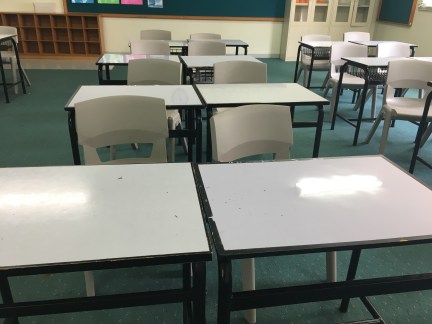
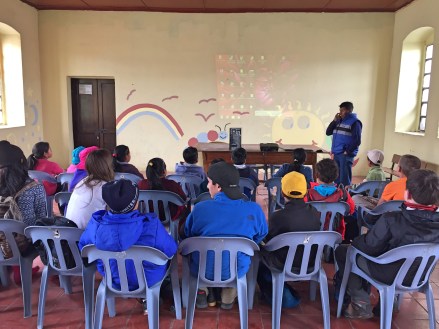
I know what you’re saying, my classroom doesn’t always look like that. Maybe it never looks like that.
Chairs, technology, walls…”school”.
If you asked most people (teachers, students, non-education people) what they expect a classroom to include they would have a pretty common list: teacher, students, desks/tables, board (smart or otherwise), books, computers. And, if you really pressed them to list absolutely everything…walls!
This, however, is where the problem lies – these constructs of a classroom and/or school are old, they are antiquated, they date back beyond my grandparents. What else that we rely on so heavily today is done/made the same way it was 100 years ago? 50 years ago? 20? Think about it, look around you, what is one relevant thing that is the same as it was 20 years ago? Computer? Phone? Books? The clothes you’re wearing? Nope…everything has changed – except education!
Every industry is working to improve their product; working to make them more cost-effective, make them more user friendly, make them more green, improve functionality or performance. Yet education, by and large, remains the same.
How are we, educators who are meant to be preparing our students for the future, supposed to do justice to a process that prepares kids for a future that includes so many unknowns?
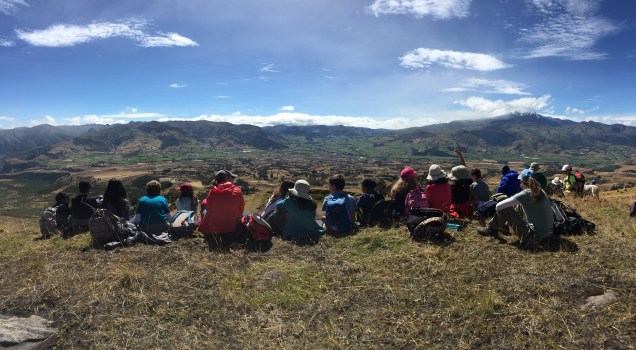
The answer is breaking away from the deep-seated rituals that have become school. We must offer students the chance to truly engage with their learning, get their hands dirty, and live a life of active (not passive!) learning.
What is this was a “classroom”…everyday??
But how?
Well, that is for each school to figure out on their own. How are they going to commit to being a school for the future? It will take courage, it will take forward thinking and it will take lots of time and effort. The results, however, will easily outweigh everything. If we keep doing things the same way, we’re going to keep getting the same results. If we’re preparing for a dynamic future, we need a dynamic present – flexible, engaging, adaptable and inspiring…
Take a look at these schools and see how they’ve already begun to challenge the construct of school and the classroom. These are all forward thinking schools (listed here from closest to traditional to least traditional, according to me)…they’re all awesome and all have room to improve. However, what they have in common is that they are all schools for the future!!
Perhaps your school isn’t ready or able to make such a leap forward right now, that is fine. However, what are you doing to create a dynamic educational experience that prepares students for the future?
I was tempted to explain these programs in brief but was concerned that an oversimplification of these wonderful programs just wouldn’t be fair. So, I’m STRONGLY encouraging you to have a look at these programs (or at least a couple) and evaluate them yourself.
A couple of weeks ago I challenged you to stop and think about your “why”. I encouraged you to think about why you teach, why you do what you do. I wanted to lay that challenge out without giving “answers” or examples. My hope was that you would take some time to watch the wonderful Simon Sinek video and stop to go through the exercise I suggested.
This week I want to share the results I came up with as I went through this process. One thing I want to add before I share my results is that I believe that these are ever-changing results. I know that when I started teaching, this list would’ve been very different from today. Even just a few years ago these answers would’ve been extremely varied. I’m confident that as I learn more and grow as an educator, my reasons “why” will change as well. There are no right answers and no wrong answers…
Why I’m an educator:
I hope that everyone in the world can achieve a curiosity and passion for learning; this is how the world will be made a better place.
There’s nothing better than the moment a child realizes they “can do it”, discovering capabilities and finding never before seen confidence is beautiful.
I hope that I can inspire students to be nice and work hard; these two qualities have never failed anyone.
I absolutely love helping someone who feels hopeless or unable; showing them that they “can” or even that they “might be able to” is amazing.
By influencing young people I hope to help the next generation to be better off than mine or any that came before.
How I educate:
I focus on the whole-child; often times looking straight past the classroom and academics to “who the student is inside”.
I am unrelenting in holding students to high standards.
I face challenges with courage, daring to say things people don’t necessarily want to hear when necessary.
I listen, contemplate and evaluate new ideas, opinions and information.
I hold myself accountable to high standards and continuously re-evaluate my values and goals.
I work to establish positive relationships, learn about the people around me and use this knowledge to help people reach high levels of success.
I challenge the status quo.
What I teach:
I teach social-emotional skills.
I teach passion and courage.
I teach curiosity and persistence.
I teach kindness.
I teach courage.
I encourage all of this in others.
There you have it, my reasons “why” as of today. These may change and some may be missing but at the end of the day, going through this process has centered my focus back to “why I do” instead of “how/what” I do.
I hope you’ve given this a try already but if you haven’t please do so!
Last week was another great week for your Year 10 students (wow, they’ve been busy lately!) as they went out into the community and got the chance to see a side of the “real world” that they haven’t necessarily seen before.
The opportunity that Work Experience Week offers for our students is one that I’ve not seen offered before, it’s a wonderfully unique experience that gives our students the chance to go beyond their comfort zone and begin thinking beyond Sekolah Ciputra. The preparation, the actual experience and the reflective process all help our students experience the world in a totally different way than we could offer from a classroom.
Beginning well in advance of Work Experience Week, our students began the planning and preparation needed to earn themselves a position working with a business or organization. They prepared job application letters, many of them went for actual interviews and they began thinking about what it would take to enter the workforce (if only for a week) and what it would mean to carry that responsibility. By the time the Work Experience Week finally arrived our students were excited and nervous, but ready for the opportunity in front of them.
With more than 50 businesses and organizations involved in hosting our Year 10 students this year, there was certainly no shortage of diversity in the experiences that our students received. Having opportunities at jobs with the Jawa Pos, any number of event organizers, or even just down the hall in the PYP, our students have been able to find something that is interesting, exciting and speaks to their own personal tastes. Work Experience Week has given our students a glimpse into the future and helped them learn a little more about what lies beyond the walls of our school.
My nudge this week is to you and your departments…How can we continue to inspire our students beyond the walls of the school? We’ve put a lot of time and effort into some amazing IDUs over the last couple of years but none of them require leaving the comfort zone of the school building. Is there a way to take an existing IDU and move beyond the walls? If not, are there new potential IDUs that could help us expose our kids to the culture and opportunities that lie beyond the comfort zone of our school? Perhaps you won’t act on this nudge this week but, in the future, when you’re working to plan IDUs or other engaging units, I’m asking you to think beyond our ‘bubble’ and get our kids out into the world!
“Exploring the world is one of the best ways of exploring the mind.” – Rebecca Solnit
“Keep exploring. Keep dreaming. Keep asking why. Don’t settle for what you already know. Never stop believing in the power of your ideas, your imagination, your hard work to change the world.” – Barack Obama
For the last few weeks our students have been my inspiration for my Nudges, even more specifically I’ve focused on our Year 10 students of late. They’ve done some inspiring work recently with their Personal Projects and shown a strong passion for learning. This week, however, I want to ask you to turn the mirror on yourself and think about your ‘why’.
If, for just one more moment, we think about those Year 10 students and ask “why did they put so much time and effort into their Personal Projects” we’re going to come back with a lot of different reasons as to ‘why’. Maybe they are passionate about the topic and loved investigating, maybe it was because they wanted a good mark, or perhaps it was to impress their teachers or their parents. Surely each and every one of those kids, at the end of the day, has their own ‘why’.
So, back to you, what’s your ‘why’? Why do you come in each and every day and give everything you have to working with (pre-)teenagers? I’m sure you’ve been asked this before, by friends, family or even strangers. What was your answer to them?
There’s a wonderful TedTalk by Simon Sinek, a motivational speaker and marketing consultant. My Nudge today is has two parts. Part One: Take about 18 minutes to stop and listen to this TedTalk (you can add Indonesian subtitles if you feel like that will help).
Now that you’ve watched that TedTalk I want to encourage you to take some time to contemplate the second portion of this week’s Nudge. Take a piece of paper and draw those three circles: Why, How and What. Start with your ‘Why’. Make a list of all the ‘whys’ that you teach. Why do you teach? Then, move out to the next ring and answer the question, “How do I teach?” From there continue on to the “What do I teach?” Be sure to start with the Why and end with the What.
If you really take your time and are honest with yourself throughout this process I think that you’ll come to some interesting conclusions. Next week I’ll be writing about our Year 10 Work Experience Week but in two weeks’ time I’ll share my results from when I went through this practice with myself. It’s a great time of the year for reflection, we’re asking our kids to do it and we should too…enjoy 🙂
After my Nudges the last two weeks, I could do only one thing this week…write this letter.
Dear Year 10 Students,
I owe you an apology, a very big and heartfelt apology!
See, for the last couple weeks I’ve written to your teachers and expressed my worries and concerns. Fears really, that you’d lost motivation, that your hopes and dreams were being set aside, or even abandoned, as you squared your focus solely on grades/marks. I worried that you had lost the wide-eyed curiosity and passion that has driven (and will drive) so many of the most successful people in this world. I was wrong. I couldn’t have been more wrong and you showed me that without even realizing it.
On Wednesday I had the privilege to stand in front of you at the opening of your MYP Personal Project Exhibition and celebrate your time, effort, and dedication over your years in the MYP. As Ms. Desita said to me just before we walked upstairs, “this is an expression of all they have learned in the MYP.” It was a beautiful sentiment that so perfectly wrapped up your time in the MYP. This conversation and the words I shared with you happened before I had seen any of your final Projects. Once the exhibition officially opened and I got to see the results of all your hard work…wow!
To be honest, I don’t know what I was expecting but I certainly hadn’t planned for all of the awesomeness I saw at each of your booths. Recently I’ve been worried that as you’d grown and matured, that you had lost the passion and curiosity I’ve seen shine so bright in our younger students’ eyes. However, after last Wednesday, I’ve realized that even though I couldn’t see it radiating off of you; passion and the drive to learn new and exciting things still flows in deep your veins.
It would be unfair of me to single out any of the amazing projects that were on display but, suffice it to say, there were a lot of projects that absolutely blew my mind. I saw things out there that I’ve been dreaming about attempting myself. Even, projects that I’ve contemplated working on but have been afraid to try. Your work on your MYP Personal Projects has inspired me, truly and honestly.
Once again, I apologize. I underestimated you. I am, today, ten times more confident than I was ever worried about you. Your passion, curiosity, perseverance, and sheer determination have been proven many times over throughout this experience.
I look forward to seeing all of these skills and more on display as you continue to your chosen Pathway next school year. You’re amazing young adults and I, personally, want to thank you for providing this community with such an inspirational show of your passions and abilities!
Last week when I wrote about hopes and dreams I shared my concern that our older students were burying their big dreams as they focused on grades/marks and short term possibilities. I’ve spent the last week continuing to ponder this idea and speaking with some of our older students to help gain more insight into this phenomenon. Last weekend, at an event hosted by one of our very own Year 10 students, I found what I think is the reality of the situation for our older students.
Our older students still have plenty of big hopes and dreams, in fact they may even have more thought out and detailed versions of them than the younger students. They, however, feel like they can’t share them for fear that they will be squashed or not accepted by peers or adults in their lives. This is a big problem!
At MatchStiX, an event hosted by one of our Year 10 students as part of her Personal Project, I was fortunate to see short presentations by a few very impressive young Surabayans. Emily, a 15 year old student at another school in town, shared her story of becoming a successful singer and songwriter. She explained that it was her dream to write and sing her own songs and that she “sang often but always sang alone.” This piece of her story, one of many from a very inspiring presentation, really hit home hard for me. Emily had a passion and a dream but was fearful of sharing it with others because she was worried that it/she wouldn’t be accepted. Fortunately she did, eventually, share her talent and it was warmly accepted by most everyone. However, Emily had to go through this journey alone because she was scared to share her hopes and dreams, imagine if she would’ve been confident and supported throughout her journey.
Another speaker at MatchStiX was Jessica, a local entrepreneur who started her own baking business. Jessica had hopes and dreams that were supported by her parents until one day they spoke with her teachers and principals at her school (not Sekolah Ciputra). Jessica’s teachers and principals convinced her parents, who had already committed a lot of money toward her dream, that pursuing a career in fashion design was a terrible decision even though it was Jessica’s dream. Her parents completely dropped all support of Jessica and her dream, she was crushed and totally lost all hope. It took Jessica three more years before she found a new pursuit, another dream she was passionate about chasing. She wanted to become a chef, with a particular interest in baking. Unfortunately, her parents were not supportive of this idea at all and forced her, once again, away from her dream. Jessica’s story has a happy ending, she found a way for her dream to come true. As I mentioned, Jessica owns her own baking business. However, hearing Jessica’s story of being pushed back time and again by the very people who are supposed to be supporting her dreams really gave me pause as an educator.
What are we doing to support our students’ dreams and help them become reality? There are definitely some things that we are doing as an institution to help our students reach these lofty goals, but what about individually? As teachers we can be talking with our students and learning about their hopes and dreams, encouraging them to pursue their passions, and sharing our own stories of chasing our dreams. Start today, take some time to think about your dreams that you’ve made come true and share a story or two with your students. Inspire someone by sharing your story, and don’t ever stop pursuing your own dreams!
Over the last two weeks I was very lucky to have been part of some tremendous student interview sessions. As we’ve gone through the scholarship application process we’ve had a number of well qualified Year 6 and Year 9 students come in for interviews. I’ve never been through this experience before and, to be perfectly honest, it’s been the absolute best way to finish a school day that I’ve ever experienced. These kids have hopes and dreams and are bubbling with energy and spirit, it’s truly awesome and inspiring.
As these interviews continued though, I did notice something that started to worry me just a little bit. See, the Year 6 students had all sorts of really big ambitions that stretched well into the future and beyond their school years, hopes and dreams they’d clearly spent a lot of time thinking about. However, as we started talking with the Year 9 students something changed, the ambitions we had heard from the Year 6 students were missing. The hopes and dreams of the Year 9 students we spoke to were focused on academic grades and short term targets. Where had the big dreams gone?
To be fair, it is reasonable to expect our older students to be more focused on the task before them and be thinking about what they need to accomplish in order to reach the university destination of their choice. I’m 100% confident that our older students still have ambitious hopes and dreams but they’re not gushing over them like our Year 6 students. I want that to change, my hope is that our older kids continue to dream big and think about the amazing possibilities for them in this world.
It may well be the case that our older students have buried those hopes and dreams, begun to consider them as ‘childish’ or ‘silly’. We know, however, that those hopes and dreams are what provide the fuel to keep on working and battling through the tough times. Without a long term goal, something to ‘dream big’ about, what are our students working toward?
As their teachers, mentors, advisors, and role models we need to show these kids that their hopes and dreams are just as important today as they were when they were in Year 6 looking up at the stars and thinking about all the amazing possibilities that lie out there in the great wide world. So no matter what year level they are in, engage your students in conversations about their hopes and dreams. Share your ambitions with your students as well, open up and let them see that it’s totally normal to have big dreams!
“A dream you dream alone is only a dream. A dream you dream together is reality.” – Yoko Ono
“The future belongs to those who believe in the beauty of their dreams.” – Eleanor Roosevelt
“Don’t be afraid of the space between your dreams and reality. If you can dream it, you can make it so.” – Belva Davis
“Go confidently in the direction of your dreams. Live the life you have imagined.” – Henry David Thoreau
“Hope lies in dreams, in imagination and in the courage of those who dare to make dreams into reality.” – Jonas Salk
 Pushing Forward