Inspired Learners Growing from Inquiry

This week we’ve hosted the regional GIN conference and it couldn’t be more inspiring!  Seeing our students come together with over 80 kids from the region to explore, teach, and learn about different issues has sent a jolt of energy through the campus.  Exploring topics such as Carbon Footprints, Korean Smart Cities, and Socially Responsible Enterprises, these globally-minded advocates are working to create a better future for themselves and generations to come.  The best part of all of this learning…it’s all optional and totally voluntary!  IMG_6414.JPG
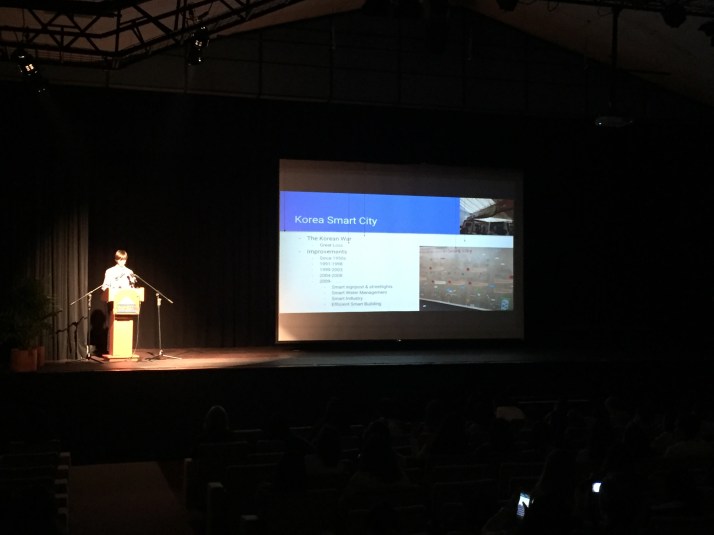
Global Issues Network is not a mandatory class, it is not a requirement, and it is not an obligation.  The students have chosen to get involved with these projects and dive into the process of making change because they are interested and dedicated.  They are digging deep to learn everything they can about certain topics; spending time researching, sharing, and then working for change because they are curious and caring.  The curiosity that our students have about these topics combined with the permission to be inquirers and ask questions has created a situation ideal for exploration…and they’re learning at an amazing rate!  

As I’ve discussed in the past, curiosity may have killed the cat, but thankfully we’re not cats!  Curiosity is considered by many to be a character “strength” (or “trait” depending which research you’re reading) that has a strong effect on learning.  Students who have a strong natural penchant to be curious and students who’ve learned to be curious both have a higher academic success rate than students who lack curiosity.  Those students who demonstrate IMG_6405.JPGcuriosity about a topic also tend to receive more attention from their teachers, potentially worsening the challenge for those students who may already be struggling in a particular subject.  All of this naturally begs the question, if curiosity is important and some kids aren’t “curiosity-inclined” then what can we do as educators to foster their interest in a subject?

Good question, glad you asked 🙂

In the lower grades our students have no homework except to pursue their passions and bring what they’ve learned to school in order to share with their peers.  These “passion projects” have sparked an interest in learning that previously may not have burned so brightly.  The smiles on the faces of these students as they pass by in the morning with their passion projects in hand is infectious, they are excited and proud of their learning.  What, however, are they learning?  Well, I’ve seen kids code their own video games, complete full research projects about crocodiles, and construct working volcanos out of chocolate and marshmallows (a couple different skills there!)  Just like our older students’ interest in Global Issues, these projects have been completely voluntary and self-directed.  These students are learning because they want to and because they enjoy the opportunity.

As our students grow older we tend to focus on the content that we “have to teach” and worry less about what the kids are actually interested in learning.  What about something like the Innovation Academy (IA) though?  As a number of us learned on our visit to the FDR school last year, this is a real thing and the students who are graduating from this program are doing so with an incredible range of skills.  The inclusion of inquiry in our academic programs need not be as drastic as creating a completely different track such as the IA has done, we can do this in a much more manageable and “bite-sized” way.  

Now, as I recently wrote, we need to give ourselves permission to stop.  I am certainly not asking you to do more.  What I am asking you to do is to stop and take a few minutes to reflect about your next unit or perhaps one that is still a couple units down the road.  Next, evaluate the priorities for learning and consider where student engagement in the material falls on that scale.  Where can you add opportunities for inquiry and exploring curiosities into the learning?  Would doing this increase student engagement?  Perhaps this looks like students choosing a character in Romeo and Juliet, comparing them to a real world person/celebrity, and developing a way to share their comparison with their classmates.  Maybe in Science class they can apply an equation or scientific process to a real world situation and create a simulation to share with their peers.  Student-driven doesn’t have to mean only student-driven, provide them with the guidelines and allow them the choice of inquiry within those guidelines.  Our students have passions, they’re human after all, let’s encourage them explore those passions and at the same time give them a glimpse into the real-world application of their school work.  

“What, of course, we want in a university is for people to learn the skills they’re going to need outside the classroom. So, having a system that had more emphasis on inquiry and exploration but also on learning and practicing specific skills would fit much better with how we know people learn.” – Alison Gopnik (professor of psychology and philosophy at UC-Berkeley)

“A subtle thought that is in error may yet give rise to fruitful inquiry that can establish truths of great value.” – Isaac Asimov (author and scientist)

“Educationists should build the capacities of the spirit of inquiry, creativity, entrepreneurial and moral leadership among students and become their role model.” – A. P. J. Abdul Kalam (former president of India)
 

Celebrating What we Value Most

It is often said, “we celebrate the things we value most.”  Well, I want to celebrate you…the teachers and leaders of our students.  

Long hours, endless frustrations, and countless sacrifices.  Fighting off colds, exhaustion, and 9 weeks of wear and tear.  Diagnosing, teaching, assessing, re-teaching, and re-assessing.  Teenagers, their parents, and all the hormones.

Success, the glimmer of hope, and the celebratory emails home.  The amazing lesson, the excitement of learning, and the joy in their eyes.  The growth, the pride, and the sense of achievement.  Smiles, laughs, hugs, and high-fives.

Students are both the greatest and the toughest part of this job.  They are the challenge and the reward all at once.  Yet, rarely, do they stop to say thank you and show their appreciation.  BUT…it’s there, I promise.  From the conversations I have in the halls and at lunch to the messages from parents.  Our students appreciate their teachers and this school.  The smiles and overall feeling of happiness that runs rampant throughout our school community is the most telling sign.  Our kids enjoy AC and they appreciate the work you do on their behalf.

What do teachers make anyway?

Well, if you haven’t seen this before you should see it now (I apologize for the occasional bad word)…and THANK YOU!!!!

What Teachers Make
by Taylor Mali

He says the problem with teachers is
What’s a kid going to learn
from someone who decided his best option in life
was to become a teacher?

He reminds the other dinner guests that it’s true
what they say about teachers:
Those who can, do; those who can’t, teach.
I decide to bite my tongue instead of his
and resist the temptation to remind the dinner guests
that it’s also true what they say about lawyers.
Because we’re eating, after all, and this is polite conversation.

I mean, you’re a teacher, Taylor.
Be honest. What do you make?

And I wish he hadn’t done that— asked me to be honest—
because, you see, I have this policy about honesty and ass-­‐kicking:
if you ask for it, then I have to let you have it.
You want to know what I make?
I make kids work harder than they ever thought they could.
I can make a C+ feel like a Congressional Medal of Honor
and an A-­‐ feel like a slap in the face.
How dare you waste my time
with anything less than your very best.

I make kids sit through 40 minutes of study hall
in absolute silence. No, you may not work in groups.
No, you may not ask a question.
Why won’t I let you go to the bathroom?
Because you’re bored.
And you don’t really have to go to the bathroom, do you?

I make parents tremble in fear when I call home:
Hi. This is Mr. Mali. I hope I haven’t called at a bad time,
I just wanted to talk to you about something your son said today.
To the biggest bully in the grade, he said,
“Leave the kid alone. I still cry sometimes, don’t you?
It’s no big deal.”
And that was noblest act of courage I have ever seen.

I make parents see their children for who they are
and what they can be.

You want to know what I make? I make kids wonder,
I make them question.
I make them criticize.
I make them apologize and mean it.
I make them write.
I make them read, read, read.
I make them spell definitely beautiful, definitely beautiful, definitely beautiful
over and over and over again until they will never misspell
either one of those words again.
I make them show all their work in math
and hide it on their final drafts in English.
I make them understand that if you’ve got this,
then you follow this,
and if someone ever tries to judge you
by what you make, you give them this.

Here, let me break it down for you, so you know what I say is true:
Teachers make a goddamn difference! Now what about you?

Thank you Taylor Mali for his inspiration and permission to use his work to inspire!

Mali. Taylor. “What Teachers Make.” What Learning Leaves. Newtown, CT: Hanover Press, 2002. Print. (ISBN: 1-­‐887012-­‐17-­‐6)

Starting Today for a New Ending

I love quotes, I collect them and enjoy reading them at all turns.  Perhaps more than anything I like breaking them down, contemplating their potential meanings and considering the context in which they were originally given.  

Recently a friend and member of my PLN posted a quote on Twitter.

@posickj got me thinking about this quote and I’ve been knocking it around in my head for a while now…

I immediately thought of Growth Mindset when I read this quote.  What could be a better philosophy in life than moving on from past troubles and starting anew?  Of course the past is important and we can learn a lot from our experiences, but the chance to wake up each day with a fresh opportunity is certainly motivational.  I could go deeper philosophically with this quote but I’m happy to focus on this marvelous message as a positive opportunity for the future.  I’d like all educators to stop and think about how this quote can be applied to their lives?  Was it a bad class or lesson?  Was it a long and stressful week?  Has the transition to a new school and city been harder than expected?  In all of these situations, “anyone can start today and make a new ending.”

It’s been a long start to the year without any breaks.  We’re staring down a five day weekend at the end of this month but we have to get there first.  Take some time for yourself and sharpen the saw.  Also, take a minute to think about where you can start working toward a new ending…

The Rewards of Risk

Last week I wrote about granting yourself permission to stop, in order to maintain balance in your life as you work towards our students’ success.  I was inspired by a few conversations with teachers this week and once again want to plead with you to grant yourselves permission, this time for something else.  We strive to practice what we preach with our students but many times in our efforts to always be our best for our kids we ask them to do something that we omit from our regular practice.  

This year as we coached our students through the SMART Goal process in the Middle School we asked them to set a risk-taking goal.  We want to see all of our students stepping out of their comfort zones to try new things, meet new people, and expand their horizons.  It is an essential part of learning and growing, something that applies to not only students but everyone.  As educators we often learn new strategies, read great articles, share ideas, and evolve our skill set.  However, something that is hard for everyone to do, especially teachers with an adolescent audience, is to take risks.

I was speaking with a teacher recently who told me about a lesson she had planned and executed that included a few new tools and ideas, it sounded fantastic.  There was differentiation, wonderful use of technology, group work, and an opportunity for reflection.  As the teacher explained, this lesson also had one more element, ”it was a disaster!”  The feeling of excitement about having a great lesson planned was stolen away from her because the lesson didn’t go as she had envisioned.  The tech didn’t work correctly when the kids accessed it and the downward spiral that followed totally took the wind out of her sails. She had taken a risk and tried some new things with this lesson but didn’t get the result she was hoping to achieve.  Her feeling of despair was completely reasonable, after all the lesson (in her mind) was a disaster and she could’ve done better.

My first reaction to this story, however, was completely the opposite of how this teacher was feeling, I was excited!  Taking risks as a teacher is hard to do.  To put ourselves in front of our students and risk something going wrong is a scary feeling, sometimes difficult to overcome.  Yet it is those risks, those attempts at something new, that really pushes our educational practice forward.  We could lean back and teach the same lesson year after year because we know it “works”, but what if we could do something better?

Just as it is important to achieve balance by granting ourselves permission to stop, it is also important to open ourselves to the idea of taking risks by granting ourselves permission to fail.  Having a growth mindset and “failing forward” is something we want our kids to do, so why shouldn’t we be doing it too?

Have a look at your next unit(s) and think about some lessons that could be enhanced by a little risk-taking.  To be sure, just as with our kids, we don’t need to be taking risks every single day or every lesson.  Perhaps a fair goal would be to take a risk and try something new every unit or maybe every couple weeks.  Some will be hits and others will be disasters but the end result will be long term gains for your students!  

Granting Ourselves Permission

We have to grant ourselves permission to stop at some point, this is education and we could work 24 hours a day for the rest of our lives and the work still wouldn’t be finished.  The importance of slowing down and giving ourselves permission to search for balance in our lives is a crucial element of success in education.  

Each day that we work with our students we should be at our very best, but the reality is that none of us can honestly say that we’re doing this.  We come to school tired, sick, and overwhelmed by outside influences.  This is normal, everyone does this and that’s okay (to a point…stay home if you’re contagious!).  No one is going to have their best day every time they wake up and there’s a reason for that, we’re human.  However, despite being human, we are still able to control a lot of the factors that determine how balanced we remain.

We can help ourselves stay as healthy as possible by tending to our diet and exercise, we can ensure that we get enough sleep, and we can maintain healthy stress levels through yoga, meditation, or another relaxing activity.  Perhaps the most important way that we can help ourselves to stay fresh and in peak form is to grant ourselves the permission to stop.  Perhaps in no other profession does the anxiety over “getting everything done” build as quickly as it does in education.  After all, we’ve got these kids’ futures in our hands, if we don’t teach them everything they need they’ll never learn it…right?!?

Well, here’s a possible wake up call for you, if you’re burned out then your students aren’t going to learn much of anything from you!  Very often as educators we get caught in a cycle of coming in early, staying late, and then taking work home.  We want to try new strategies, give quality feedback, engage our students and increase student learning.  Don’t get me wrong, we should be doing those things…BUT…we need to do it at a sustainable pace, one at which we can stay healthy, relaxed and present for our students.  Find your limits and hold yourself to them without going over, it’s a long fall if you go over the edge.

It is essential that we acknowledge the fact that the work is never going to feel like it is done, that there will always be something more we could do.  Granting ourselves permission to draw a line and stop pushing for the sake of our own sanity must happen, or we will all work ourselves into the ground.  Prepare yourself at the beginning of the year, month, or unit.  Allot yourself time to complete the absolute essentials, then allot time for the balance outside of school,  and finally you can use what is left over to let yourself run wild with the “extras”.  To successfully maintain balance we need to plan for it and make it a priority.  

Including teacher inservice days we’ve been back to work for seven weeks now.  For new teachers tack on two more weeks dating back to your arrivals.  Some of you also spent a full week with kids on Discover Ecuador.  It seems like we just started school but we’re already well into the year!  Take a minute to check-in with yourself…are you getting the right amount of rest, what about your diet and exercise, and have you taken the appropriate time to decompress and relax on the weekends or with friends?

Grant yourself permission.

Camp Kuri Kucho

I am once again blogging my reflection of my Discover Ecuador week.  I want to model for our students as well as share my experiences and learnings.  Two amazing weeks gave me much more to think about than I could write but here are some of my thoughts as well as photo “evidence”.  

DSC_2774.jpg

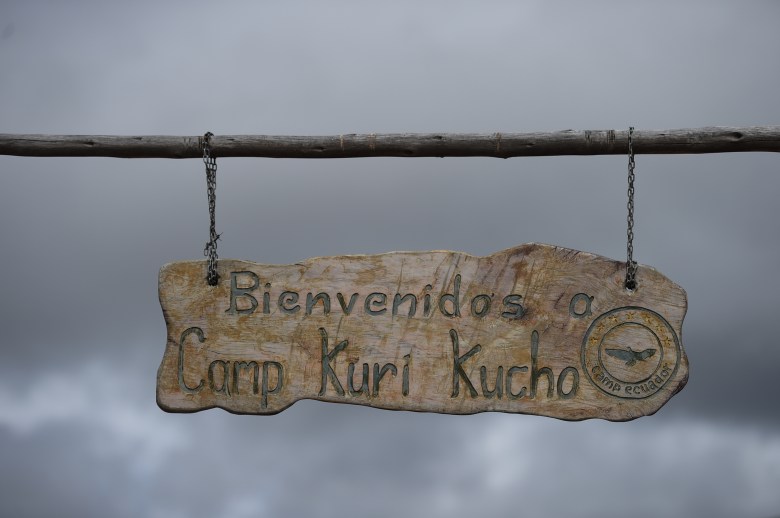
For the second week in a row I was away with students for Discover Ecuador trips, it was another great experience.  Working with the 7th grade class at Camp Kuri Kucho (thanks to Gabo Cadenas for the above photo) was an absolute joy!  The community, San Pablo Urku, welcomed us with open arms and we felt totally at home as we worked to support the projects of this small community.  My experience with the 7th graders was just as amazing as my trip to the Amazon the week before but different in many ways, most obvious of which was the weather!

Accomplishments

The biggest outcome of this week for me was the impressive and inspiring work achieved by the 7th grade group.  In the week prior to our visit the 9th grade class had been in this community starting and working on some projects.  The 7th grade continued their work in many areas and started a few of their own projects.

IMG_6142 2.JPG
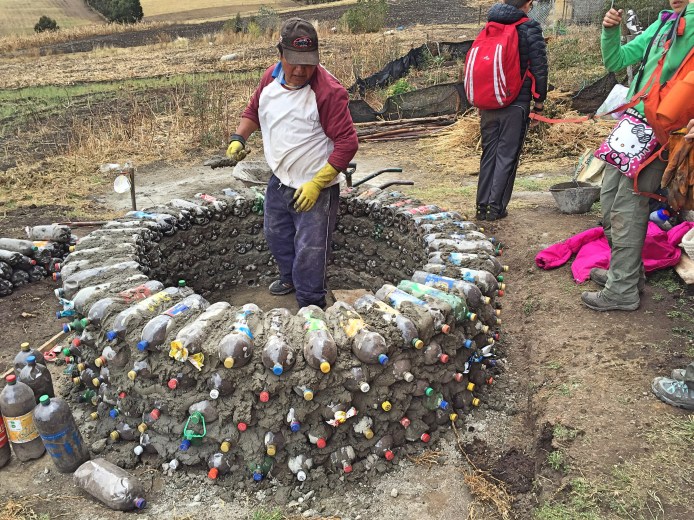
The first five rows of a 15 row water tank.  Each plastic bottle is filled with dirt to create a “brick”.  Foundation laid by 9th grade last week.

Over the course of the week we were able to see the fruits of our labor as the projects progressed.  Our students felt tremendously proud of the work they accomplished.


The main focus of our work was centered around the local school.  In this community they have a school of about 90 students from elementary school up through 10th grade.  The students in this school are from the surrounding villages and could be seen walking great distances to get to and from school each day.  The AC students were able to connect with these students as they joined the 45 minute school break each morning.  Playing soccer, basketball and joining conversations with the local students, our kids got to know the community members better.  The connections they established gave even more meaning to the work we were completing on their behalf.

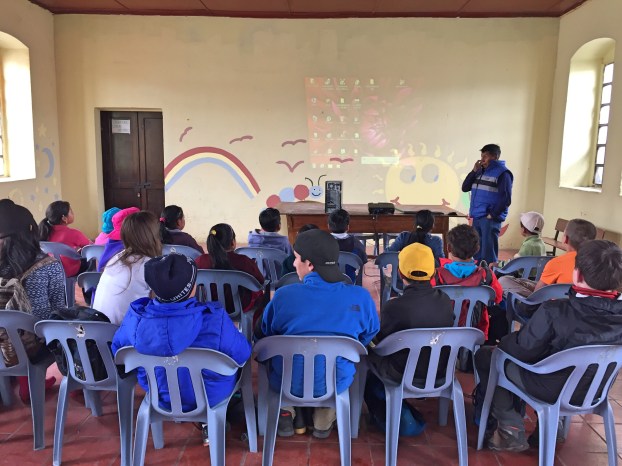
One of the highlights was the opportunity for our students to take part in a lesson with some local students.  The topic was about the use of pesticides and the harmful impact they can have on the agriculture and the environment.

IMG_6002.JPG
Classroom “theory” time before doing the “practical” in the garden.

After the lesson our students worked side by side in the garden with the local students to begin planting either potatoes or fava beans (habas).  Since this school is a rural school they’ve worked to establish a sizable organic garden for their students to learn the process and importance of farming.  Much of our service work involved this garden.  It was a unique experience and opportunity for our students to work in a meaningful and real context with the local students.


IMG_5978.JPG
Ernesto teaching us how to milk a cow and other fun facts about cows and their milk production.

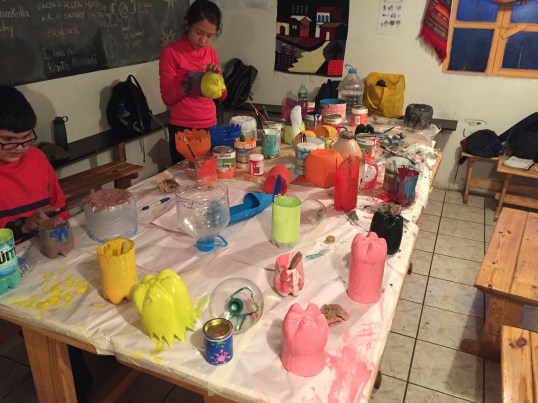
Aside from the wonderful service work completed by our kids we had a lot of other learning opportunities throughout the week.  Afternoon activities allowed the kids to learn to make tortillas from scratch, learn to milk a cow, and upcycle a plastic bottle into a “maceta” (a pot for plants).

IMG_6011.JPG
Maceta creation station led by our fantastic project leader, Karen.

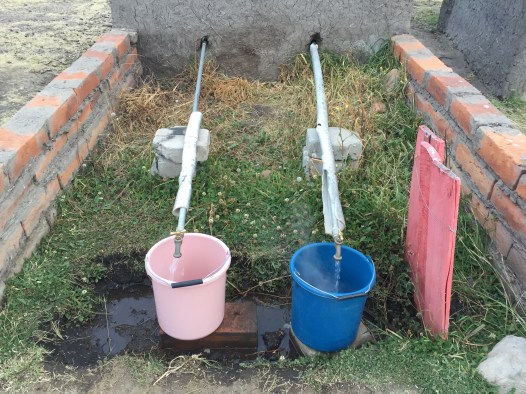
Each student participated in all of these activities and had the chance to come home with their maceta and a plant.  Other opportunities included learning to conserve water (a very valuable resource in this community) by taking a “bucket shower”,

IMG_5977.JPG
Buckets getting filled for our “showers”.  Hot water boils on the other side of that wall, each person gets about half a bucket of hot water and fills the rest with colder water.

working as a team to wash their own dishes and silverware, and sharing a bunk space with over 15 other classmates.  All in all, our 7th grade group had the opportunity for a lot of amazing takeaways from the week.


What I Learned at Kuri Kucho

While this was a tremendous learning experience for our students there were also some great takeaways for me too.  We worked hard during the day and enjoyed the afternoon and evening team building experiences.  The students learned countless lessons this week.  I too learned a few lessons of my own through this experience and also a few good reminders!

Last week I talked about how much I learned about my tolerance for rain.  This week, I learned just how valuable rain (and water in general) can be for a community.  San Pablo Urku lies in a very dry area and is currently in the midst of the dry season.  We were constantly reminded of this fact since they only have running water a couple days of the week.  Students (and teachers) had to deal with toilets that didn’t flush with the push of a button, an absence of traditional showers (they waste a lot of water), and dust and dirt all over everything.  While we were there we experienced a day of rain and could see first hand just how valuable that water was to the community.  Water collection tanks filled, plants and crops received much needed hydration, and the whole community smiled as we sheltered from the rain (they knew how important that water was!)  Water, the essence of life, is constantly on the minds of this community…something we take for granted everyday was put into a very different perspective at Camp Kuri Kucho.

Another good reminder of things that we take for granted was the importance of certain types of food.  I can walk out my front door and within two minutes be at a pizza place, a sushi joint, a noodles restaurant, or cevicheria.  In San Pablo Urku the staples are potatoes and fava beans.  Every meal includes one of these very filling foods that also provide an amount of protein to their diets.  Meat is rare and when included it is a treat.  Cuy (guinea pig) are raised by almost all members of the community, as well as chickens.  Cows provide milk,

IMG_5981.JPG
There were lots of sheep around San Pablo Urku.

sheep provide wool, but both exist as a rare delicacy as far as their meat is concerned.  The last night hamburgers and french fries on the menu, it struck me as to how foreign this menu must be for the local community…something so normal to me is completely foreign two hours down the road.

Wonderful Experience

Waking up each morning to the sight of Cayambe looming over head was an absolute joy.  I didn’t let a chance to appreciate this beautiful sight ever pass me by.

IMG_6074.JPG
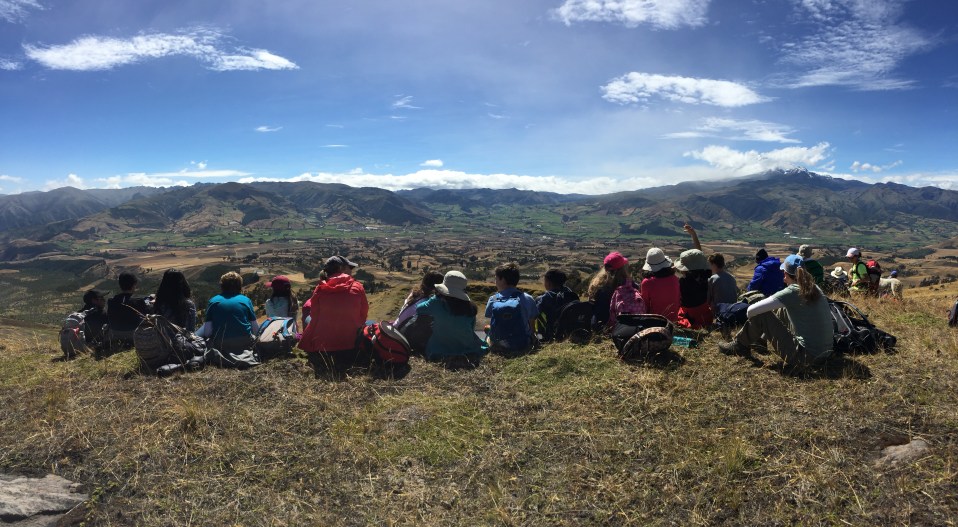
A hike with an amazing view as a reward, beautiful!

We had clear mornings each day and I even woke up one night at about 4:30 to see a full moon hovering just over the volcano…awesome!  Beyond the amazing scenery was the chance to take in a completely new experience with our students.  Visiting this community and working alongside the maestros to improve their garden and water tank was inspiring.  Community service is important for the people we help but perhaps even more important for the inspiration we can take away from the experience.  I feel very thankful to have enjoyed this trip with the 7th grade students.


Camp Amazonia

IMG_4320.jpg

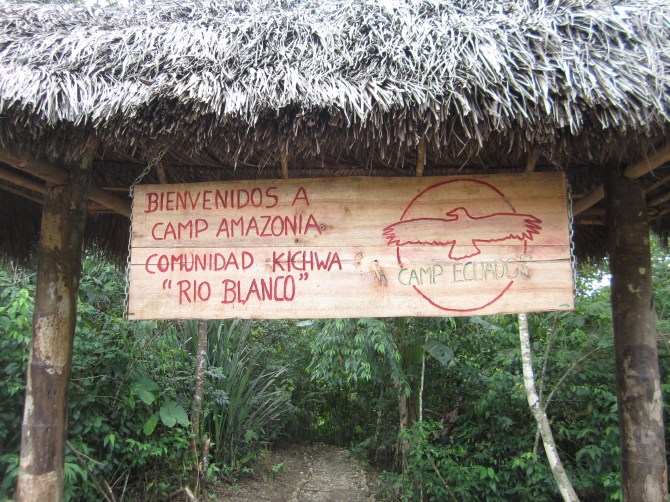
Last week I was lucky enough to join the 10th grade class on their trip to Camp Amazonia near the communities of Rio Blanco and San Alberto in the Amazon Jungle.  It was my tenth school trip in as many years and each has been unique in its own way.  This was my first time taking high school students on a trip and I can now say I’ve traveled for a week with every grade from 3-10 except 9th grade.  This trip included lots of hard work to help the local Kichwa communities, team building, cultural activities, and a trip to the Jumandi Caves.  At the end of the week everyone was exhausted but there was also an overwhelming sense of achievement!  

Awesomeness

Every time I take one of these trips there are wonderful examples of how amazing young adults can be when they are pushed out of their comfort zones.  This past week certainly did that, kids and adults alike were challenged in situations that went well beyond our everyday routines.  Right from the start we got right down to business with some hard work in the morning and then again after lunch.  We started the day in the rain and ended in fierce heat and sun.  Not only were we pushing ourselves hard to help these communities but the weather was pushing us as well.  However, by the end of the night everyone made it to dinner with a smile on their face and a sense of satisfaction in their hearts.  

IMG_4321.jpg
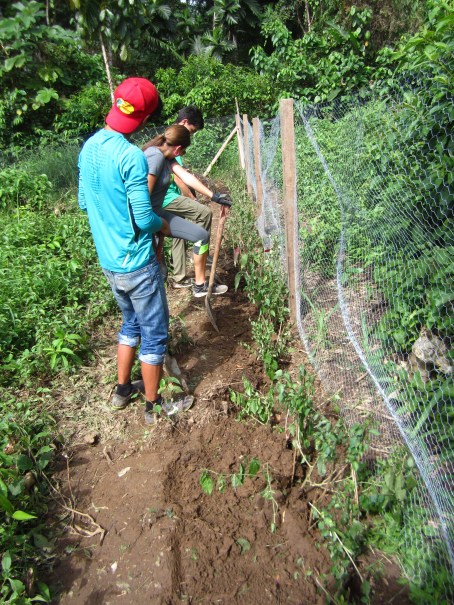
Working hard to create a botanical fence line.

The sense of community that develops over the course of a week like this is impressive to say the least.  Students who are struggling for one reason or another are picked up by their classmates without any teacher intervention.  Classmates who hadn’t really engaged with each other in the past can be seen walking, working, eating, and hanging out together.  New friendships are formed and old bonds are strengthened.  As important as community can be in international schools, trips like this are crucial!  

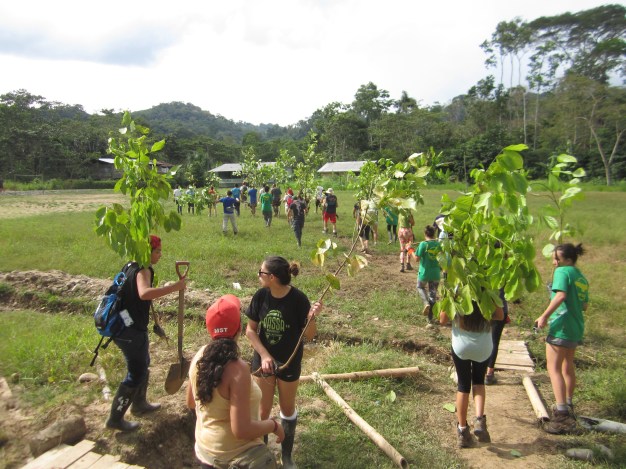
I’m not sure there are words to express how impressed I was with the efforts of the 10th grade group over the course of the week.  Through torrential rains, back breaking work, spiders and other critters, these kids stepped up in a huge way.  The work they did this

IMG_4440.jpg
Heading out to plant trees, helping to reforest a recently devastated area.

past week will benefit those communities for years to come.  Our students may never return to this area but their mark has been made, their efforts were not in vain.

What I Learned About Myself

While this was a tremendous learning experience for our students there were also some great takeaways for me too.  This trip was, by far, the most physically challenging of the school trips I’ve enjoyed.  I’m not shy about some hard work and I enjoyed every second of getting my hands dirty this week.  However, I learned a few lessons of my own through this experience.  

First off, I used to think that I would do pretty much anything to be out of the rain.  I HATE rain, or at least I used to think I did.  I mean, I’ve always loved a good thunderstorm but that’s conditional on me not being caught in the down pour.  In the Amazon, when it rains, it pours.  When it pours in the jungle there’s just no way to avoid it, no way to stay dry, get dry, or even remember what dry feels like!  However, it’s warm outside which makes being wet much more tolerable than I had ever realized.  In fact, by the time we got to Thursday and got stuck in yet another torrential downpour I was so used to the rain that I soaked it up and enjoyed every last drop.  I learned that I could manage being wet, even soaked with boots full of water!  

Another great reminder for me this week had to do with being prepared.  While I was prepared with all of the right materials and supplies, some of the kids weren’t.  Usually I pack extra and plan for this situation but for some reason I didn’t this week.  I gave up my gloves and came home with some blisters as trophies.  Not all of our kids had the proper footwear but thankfully Camps International had extra boots.  Finally, when it comes to being prepared in the jungle…bug spray is your best friend, I got lazy at the end of the week and my legs got eaten up!  Pack heavy and take extra gear, especially if you’re staying in cabins and not carrying it around all week.

Thankful

At the end of the week I feel extremely thankful that I was able to join this experience with our 10th graders.  We made a difference in that community, we learned about the Amazon, and we grew closer as a group.  Working alongside this inspirational group of young adults made me a better person and a better educator.  The best news is that I get one more week, this time with 7th grade…I can’t wait!!

IMG_4427.jpg
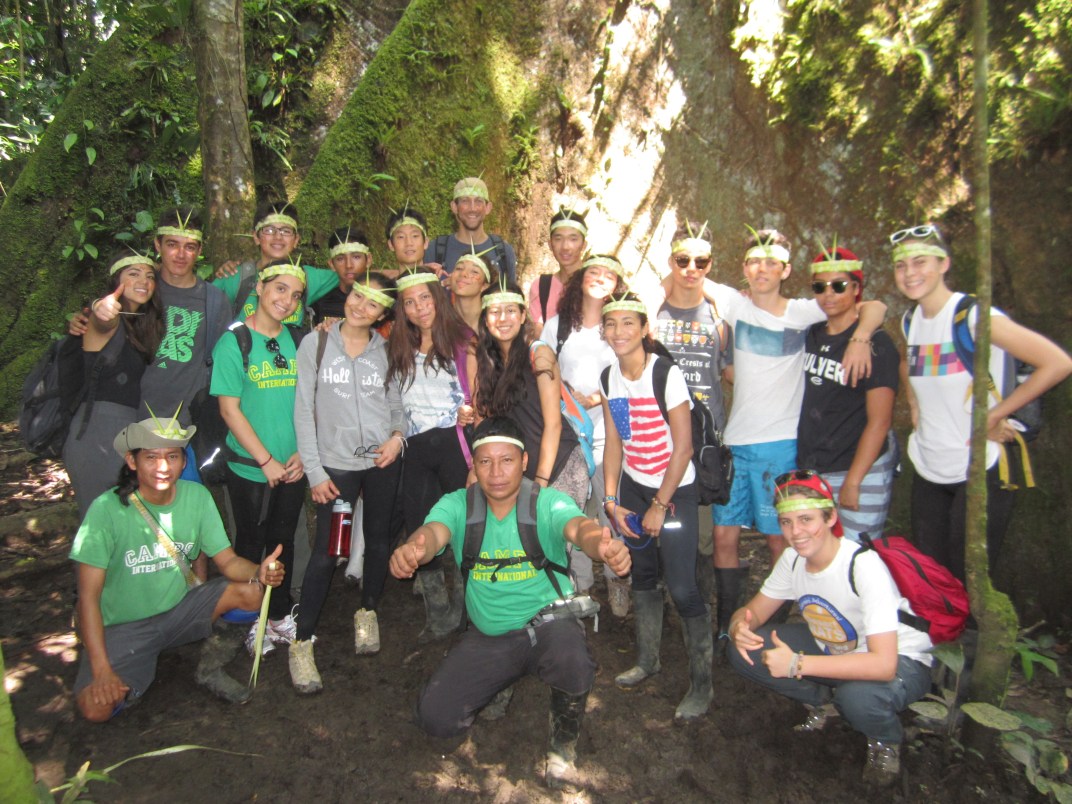
Hiking in the jungle, we stopped next to a 300 year old tree to learn how to create our own headwear.

Teenagers – Wild Animals

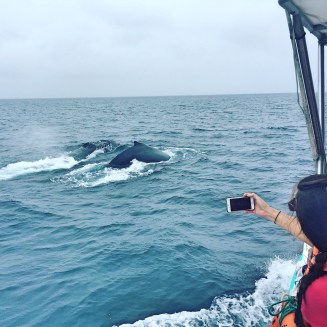
IMG_5524Last week Amy and I went to the coast to see Humpback Whales.  Just before we got on the boat our guide gave us the whole safety routine, then added one more piece that got me thinking.  Basically he said, these are wild animals and we never know what they’re going to do, we can’t predict their behavior so they may be jumping or we may not see anything, it’s nature.  

While we were motoring around looking for and watching whales I had a lot of time to think and I began connecting our guide’s warnings about wild animals to what we experience with teenagers on a regular basis.  Many outsiders, those NOT in education, view these lovely young adults as wild animals.  As I think about it, they’re not totally wrong!

Teens, the human variety, are capable of very high level thinking and processing.  They are empathetic, sympathetic, and very resilient.  Additionally, they are also full of hormones and are constantly changing.  In that regard they could be looked at much like the Humpback Whales I was hoping to see jumping all around me – wild and unpredictable.  

It would probably be a bit strange if I rallied all the teachers around each morning and reminded everyone about teenagers, “remember, these creatures are unpredictable…it’s nature, please be patient!”  However, it wouldn’t be untrue.  We’re dealing with some of the most diverse and rapidly changing brains in the world, no matter how well we think we know them nothing can be taken for granted.

The captain of our boat has been taking people on tours to watch whales for years now, he knows these waters and he has learned a lot about the movements of these massive mammals.  In an attempt to understand the wild, teenage minds that we encounter each day we work to establish positive relationships with our students.  By learning about their personalities we can better anticipate their learning styles and needs, much like the captain of our boat learning to anticipate the whales’ next move. We also have to remember that their brains are changing, each day may not guarantee the same interactions and behaviors as the last.

Keeping in mind that our kids are constantly changing is extremely important for the success of our young students.  Just as there will be days when the whales jump and there will be days when they don’t, the same can be said of our students – there will be good days and bad.  Also similar to the whales, we won’t ever know when these “jumping days” will happen for our students nor do we know when a bad day will strike.  The whales don’t jump every day but that doesn’t mean the captains don’t take tour groups out to sea in an effort to see them.  In the same spirit we must prepare to give every student the opportunity to “jump” each time we see them.

Creating the opportunity for kids to “jump” is what education is all about.  It won’t happen if they’re not comfortable and prepared, nor is it something we can force.  Each student is going to “jump” differently depending on a wide variety of factors.  Be ready for anything from these wild young minds, create the opportunity, and enjoy the show!  

The Educational Caravan

This past summer I was visiting a friend in Chicago, we had to drive from one place to another and he said, “just follow me”.  It was about 30 seconds later that he ran a yellow light and lost me in traffic.  I figured he would’ve pulled over and waited for me but as it turns out he was too caught up in a conversation to realize that I was stuck at the light.  Eventually he answered my phone call (thank you technology) and came back to find me parked on the side of the road, frustrated and annoyed.  The next day as I drove back to Wisconsin I started thinking about the similarities between this situation and education, I found a lot of connections!

I started realizing that being a member of a caravan, whether the leader or follower, was a lot like working in education.  We’re all educational leaders in one capacity or another, whether as the leader of a school, division, or classroom…we’re leading the caravan and in some cases we’re following as well.  To better understand caravans I needed to think about them in an educational context, while doing that I identified five key parts to successful caravan situations both on the road and in education.

  1. The Role of the Leader

When I was following my friend he had the implicit responsibility to make sure that I arrived at our destination.  He was supposed to lead the way and guide me to the final goal.  While the destination in this story wasn’t very important, we often find ourselves as leaders in education pursuing lofty and extremely important (for our students) goals.  

The leader of the caravan has the job of ensuring that everyone makes it to their goal! Thinking back to family caravan trips as a kid, I’m sure there are a few times when my parents would’ve preferred if one or two of the other families didn’t make it to the final destination but in education it doesn’t work that way!  Our students, teachers, or other community members are trusting us as the leaders of the pack to get them ALL to the final destination.  

  1.  The Route

As the leader of the caravan you have the responsibility for getting the entire group to the desired destination.  The route you choose, is often times up to you. There are a few factors to consider when choosing your route but there are no overarching rules that apply here.  Perhaps you or the group want to arrive as soon as possible, sometimes the safest route may be a little slower and but more desired.  You also have to consider avoiding road construction or other detours, potential headaches are often bypassed intentionally.

In education we work together, we collaborate to develop the best “route” to get our kids to the ultimate learning goals.  Sometimes we collaborate with other leaders in the journey and other times we work with everyone involved in the process.  Ideally we are working together to choose a path from the start and when we hit those obstacles along the way we come back together to make a collaborative decision about the best detour to take.  In either event, it is crucial that everyone has a solid understanding of what the destination will be and as much information about the route as possible.  

It is often said that the route isn’t important, that it is the destination that matters.  While this may be true as a generalized statement, when it comes to education the learning process is extremely important.  Choose your route carefully, collaborate with your colleagues, and work to lay the best path for those you’re leading.  

  1.  The Speed

Ever been in a caravan with a leader who likes to push the speed limit to the max?  How about someone who prefers to drive five miles below the speed limit?  It’s the “Goldilocks” paradox, too fast and too slow are no good, as leaders we have to be “just right” when it comes to pacing.  The larger the group the harder to find that sweet spot but it becomes even more essential with large groups.

  1.  Maneuvering Obstacles

When I got left behind at a stop light this summer I ended up lost because my leader wasn’t aware of the obstacle at hand.  His running of a yellow light forced me to decide, run a red or stop and wait.  As leaders in a school, whether leading students or teachers we have to be aware of the obstacles we face.  Do we rush the end of a lesson because the bell is going to ring and risk leaving someone stuck behind?  If we’re leading a school wide initiative, do we push on even if everyone isn’t on board just so we can implement the plan by a certain deadline?  How do we advance the whole group while also maneuvering through the wild obstacle course that is a school year?

One thing that is important to consider is that we (both leaders and followers) move at different speeds and encounter different obstacles in our learning.  Whether a disruptive home life, learning challenges, or a desire to move quickly through material, we’re all faced with different situations.  As the leader of the pack it’s important to keep this in mind.  Sometimes it’s okay if someone trails the group, as long as they remain in sight and can continue down the path at their own pace.  These people may need extra support.  That might take the form of Student Support Services, language acquisition assistance, or one-on-one support.  No matter what the obstacle there is surely a path to be followed.  Sometimes the trouble is just working to find that path and other times the challenge is overcoming multiple obstacles simultaneously.  Just as I mentioned when discussing the route, in education we work together as teams to help everyone succeed…especially those with multiple challenges or obstacles to arriving at the destination.

  1.  Watch Your Rear-View Mirror

As I sat waiting for my friend to come back and find me this summer I couldn’t fathom that he had just continued on and not noticed I wasn’t behind him.  However, as I mentioned earlier, he was too caught up in conversation to look in his mirror to check on me.  As the leader of the caravan it is your job to make sure everyone is still behind you.  On the road this means checking your mirrors regularly and verifying everyone’s presence.  Perhaps you even have a system set up so that everyone is responsible for the car behind them, thus creating a chain of accountability.  No matter the plan, it is important that everyone travels together and ends up at the same destination.  

In a leadership context a rear-view mirror isn’t the literal tool for checking on your followers but the fact remains that we must be sure that those we are leading stay with the group.  With a group of teachers moving toward an initiative you might form cohorts so that everyone is accountable to their small group.  Similarly in a classroom, small groups are often used to help students move forward with their learning collaboratively.  It is also possible for the leader to track their followers’ progress individually, a strategy perhaps more fit for smaller groups.  Whether by taking sole responsibility or sharing the task of monitoring the group, leaders must constantly check with their followers to ensure that everyone continues moving toward the final destination.  


The Road Ahead

This past summer I was left behind and felt lost.  I’ve been in the same place while working in school, both as a student and an educator.  During my two hour drive back to Wisconsin the similarities between these two scenarios really came clear for me.  Whether the leader or the follower, it is important to understand the dynamics of the caravan and the important similarities to the classroom and education.   

As educational leaders we’re all leading one caravan or another, and for many of us we’re busy leading multiple different caravans with different destinations.  Continuous movement forward is the main goal as we drive on toward the ultimate target.  However, we must keep in mind that we’re in this together…some people drive faster or slower, have less capable cars, or are just learning to drive.  No matter who is following it is imperative that we continue to consider everyone who is included in our caravan.  

Drive on 🙂

Exit Celebrations

As the year comes to a close it’s a time to celebrate the growth and success of our students and their learning.  I’ve seen absolutely amazing things from our students this year, they (and you) are clearly proud of the work they’ve done.  Throughout the year we do a lot of work to reflect and document with our students, I’d like to consider what we do at the end of the year to tie everything together.

Earlier in the year we had our Student Led Conferences, a beautiful way to celebrate growth and achievement for our students.  They sat with their parents and shared goals, work, and results.  There were hugs, high fives, and lots and lots of kinds words shared between students, parents, and teachers.  But that was so long ago already!  

Vicky Davis (@coolcatteacher) recently shared a great piece titled Exit Celebrating: 8 Epic Ideas for Ending the School Year.  Please take a couple minutes to look at this piece and think about how you can end the year in an epic way!  I know that time is tight right now but some of these ideas can be implemented with little to no time or effort.  

Just as we have brought our year to a close with end of the year conversations about professional goals, this is a great opportunity for our kids to do the same.  

Finally, I would like to celebrate all of the amazing colleagues I’ve been lucky enough to work with this school year.  Transitioning to a new school is never an easy thing.  However, coming to AC we couldn’t have walked into a more welcoming and open group of colleagues.  We were greeted with open arms and that hasn’t changed one bit.  From day one until now the amazing people who work at AC have been helpful, supportive, and positive influences in our lives.  What a tremendous group of people we have here leading the educational drive for success, it’s inspiring!

Thank you!!