Be a Learner to be a Leader

The mini-bio posted on my blog says that “I’m an Associate Principal at an international school in Quito, Ecuador. That’s my job but only one piece of who I am; other parts include brother, friend, educator, traveler, reader, risk taker and sports enthusiast.”  The problem, I’ve recently realized, with this bio is that it’s missing a few pieces.  The first piece, most people wouldn’t necessarily include in a bio, “I’m not as good at any of these things as I’d like to be.”  The other part is that I’m a learner, trying to grow, and be better at all of these things and more!  

On our most recent holiday Amy and I traveled to the Galapagos, wow, what a trip!!  During the trip we met some really interesting people, none more interesting to me than our naturalist guide.  He’s been guiding in Galapagos for 26 years and knows A LOT!  Throughout the week, if I wasn’t underwater looking at all the amazing marine animals then you could surely find me walking along side our guide asking him questions or just listening to what he had to say.  On one of our walks he said something that got me thinking deeper, he mentioned his recertification process for being a Galapagos naturalist guide.

You see, it makes sense…to guarantee the best quality naturalist guides they require them to attend regular classes to learn about the new scientific research and biological information being learned through research in the Galapagos.  The guides then need to demonstrate their knowledge in order to maintain their license to guide, thus ensuring that each guide meets a certain level of competence.  This all makes perfect sense and is incredibly logical, I mean who wants a poor guide with outdated knowledge?!?  

This got me thinking about my career, who wants a poor educator with outdated knowledge?  

I hope the answer to that question is rhetorical.  As educators we all seem to have a predisposition towards being up-to-date on the best educational practices available.  However, it’s not easy, especially from an international post where resources may not be as readily available as in our home countries.  So what do we do to ensure that we’re the best we can be?

Going back to my bio – I’m adding “learner” to my bio because it truly is a piece of who I am.  I work to read as much as possible about current educational research and best practice.  I try to build my network of resources and work hard to improve a little bit each day.  It is one of my personal goals to be a better person today than I was yesterday.  That includes professionally AND personally.  

I’ve realized over the last few years that life is reflected very often in our jobs and vice versa.  Reading this great blog post the other day made me start thinking about how important this really is to my life.  I’ve often worked to be better at my job by applying my outside life to the things I do at school but I’ve never gone so far as this article suggests, I’m going to give it a try.  Similarly this article about 10 activities you can do at lunch to make yourself a better professional/educator/person.  They’re not difficult, nor are they things that are boring, have a look and think about them the next time you walk out for lunch.

It’s a joy working with such dedicated and professional colleagues.  Knowing that the people who’ve read this will actually go out and think a little deeper about how they can grow is exciting, we’ve got such an amazing community here at AC – it’s inspiring!!  

Strengths Based Reflection

As the semester has drawn to a close there has been a lot of reflection happening.  Kids, parents, teachers…everyone is thinking back on half a school year’s worth of efforts and thinking about how they can grow and improve.

It’s a refreshing but tiring time of year.  With thoughts of an extended holiday on our minds it is sometimes tough to sit back and think about all that has occurred.  As I sat with a middle school boy today and talked about his growth (sometimes lack thereof) so far this year it dawned on me, reflecting is HARD!

Very rarely do we sit down and focus solely on the positives.  In fact, many times people sit down and think about, “Oh man, what went wrong?  What can I do better?”  This kind of thinking is exhausting and defeating.  So as I was reflecting on reflecting today I drew a connection to a conversation I had with a teacher earlier this morning.  We need to practice what we preach.

With students who are constantly testing our patience and require discipline, or negative interactions, we need to build ‘credit’ by forcing positive interactions.  For example, when contacting a parent about their child’s misbehavior it’s important to show that we aren’t focused totally on their negative behavior.  To do this, we include some compliments or point out some of the positive interactions that have occurred with that student.  Then we can get into the details of the areas for growth.  Similarly, when we write our reports we aim for “two stars and a wish”.  The goal being to celebrate the positive and target potential areas of improvement.  This is how we have to treat self-reflection as well.

I’m going to keep this (relatively) short this week and ask you to take some time over the semester break to self-reflect.  Start with focusing on what went well this past semester, taking a moment to celebrate your growth as a professional.  As you do this, progress into thinking about goals and targets for the next semester.  What kind of things would you like to strengthen and improve from the first half of the year into the second?

Self-reflection is an important part of the growth process but focusing solely on the negatives won’t lead to the desired growth…start first by thinking about your strengths and the positives you want to draw on.  Build on the positives, keep working on your strengths as well as any areas of growth you identify.

Happy semester break and Carnival.  Enjoy the break!!

Why I Blog and You Should Too

Have you heard this before, “you should be writing/blogging/sharing”?  Maybe, maybe not…perhaps it’s been a colleague who’s tried to convince you to share your classroom knowledge and experiences.  Perhaps it’s your friends who know you’re such an amazing cook, photographer, or artist.  If your family and friends are anything like mine then surely someone has insisted you share your traveling experiences so they can live vicariously through your awesome life 😉  But it takes time and effort – time and effort you’d rather dedicate to your craft, hobby, or family…so what do you do?

About three years ago I made the decision to actually do it, to start blogging.  I had considered it for a number of years, mostly planning to write about my travels and experiences.  However, three years ago when I finally committed to starting a blog I decided it had to be about education.  Why?  Good question…

Looking back at my decision I realize (or at least I’m ready to admit) that it was a decision I made for selfish reasons.  See, I had started writing simple emails to the staff at our school.  They were short, one to two paragraph pieces generally related to a piece or two of research that I had encountered earlier in the week.  I never received much feedback from our staff and figured they generally went unnoticed or even worse, ignored!  However, I was seeing growth in myself as an educator and as a learner.  When I first started to send these short pieces to our staff I was trying to help them improve as educators.  However, I realized that perhaps more than anyone it was ME who was growing from this process!

What happened was that in order for me to write a short one to two paragraph summary of an article with a couple ideas, I had to spend a lot more time pondering education than it took me to actually type two paragraphs.  I estimate that for every article I bookmark in my “professional readings” folder, I read another nine or ten that I don’t bother saving.  Beyond reading these articles I spend a lot of time just pondering, wondering, and questioning the information I’ve learned through these readings.  It’s amazing professional development just to go through this exercise on a regular basis.

I hear you, “well that’s great Bret, but it has nothing to do with blogging” and I agree…kind of.  If I hadn’t committed myself to sitting down each week and writing a blog post (I’ve published 85 to date, make that 86 today!) then I would have NEVER gone through the time and effort to have read and learned so much over the last three years.  I’m a naturally curious person and can be easily drawn into anything (even terrible TV shows that I really should have no interest in watching!!)  SO, a lot of the time I spend reading educational articles, following people on Twitter, and listening to TED Talks is time that I would probably otherwise spend on silliness like Facebook, Instagram, or bad TV.  Blogging has redirected my time management in a sense but it has also expanded my horizons further into education than I could’ve ever imagined.

I will continue blogging and writing professionally (I’ve also started writing book reviews of educational texts) because I enjoy it and find the opportunity to grow personally satisfying.  But I’m not you and you’re not me.  You may be similar or maybe not…so why should you blog?!?

There is no way I could ever come up with an exhaustive list of reasons why anyone should blog but here are a few good ones (should you need more of a nudge):

  1. Professional Growth:  As you may be able to guess, I’m not sure I could come up with a better way to grow yourself professionally than by reading and writing about your craft.
  2. Networking/PLN:  Putting your ideas out on the internet is a great way to get feedback from others in your personal/professional learning network.  Conversations that you would normally never be able to have become options when you share your work/ideas with the world.  
  3. Positive Exposure:  Your online presence is becoming (or perhaps already is) a very important part of your professional portfolio.  Sharing your educational thoughts is a big step toward showing the world where your educational beliefs/ideas lie.  (Prospective employers LOVE to see a positive presence!)  AND sometimes cool stuff like this happens…

If you’re still unsure, I’d like to encourage you to try…just try.  Don’t publish anything yet, take some time to sit down each week and just write.  Use Word, Google Docs, or whatever and save your work.  Write about an idea that struck you, an article you read, or in response to something you’ve seen…it doesn’t even have to be about education!  Just start the practice of sitting down to write.  Give it a shot, in a couple weeks I’ll share some tips and articles about setting up your blog…by then you’ll already have some practice and a good idea of what your writing voice sounds like 🙂


Modeling Excellence

We’ve received a new resource for our Transitions and Cougar Time programs and I’ve been spending a lot of time reading through it.  One of the things I’ve found very interesting while looking at the “teacher edition” is the constant urging (by the author) for teachers to essentially “practice what they preach.”  

As I make my way into classrooms, follow up with students about missing work, and speak with teachers it often dawns on me that a lot of the time we (the adults) are asking our kids to do things that we aren’t doing.  “Stay organized” we say, when our desk is a mess of paperwork.  “Meet deadlines” we beg, as we delay two weeks to turn back tests or essays.  “Show pride in your work” we encourage, when a quick glance at our classroom spaces show few efforts of our own pride.  There are few teaching tools better than a positive example, yet too often we fail to provide that example ourselves.

I wrote recently about being consistent with our students in order to hold them accountable.  However, what if we didn’t even need to reach that step in the first place?  By setting an example that we expect our students to emulate we are showing them a path toward success.  The problem, often times, is that our students have seven or eight different teachers and therefore just as many “examples.”  Perhaps, there is an opportunity to come together on a set of common understandings and expectations for all students…sounds like a challenge!  

This may sound like a crazy idea, bringing everyone together to agree upon a set of common expectations for our students, what a lot of work?!  However, isn’t it worth it if it helps our students be successful?  

In my first couple years of teaching I shared about 60 sixth grade students with another teacher in what was called ‘intermediate school’, a mix of elementary and middle school.  He had half for the first part of the day to teach Math and Science and I had the other half for Language Arts and Social Studies.  After their specials class and lunch the kids switched classrooms.  Keith (my partner teacher in these early years) and I communicated very well and held a common set of expectations for our students – it helped that I was a very green teacher and needed all the help I could get!  Our students did very well and, for the most part, were able to meet our expectations with very little reinforcement along the way.  This was a happy medium of sorts, not too many teachers but not just one teacher like an elementary school…it made things easier and taught me some important lessons:

  1. Everyone has to be on the same page (easy with two teachers, very tough with eight!)
  2. Common understandings and agreements must be agreed upon and communicated by everyone.
  3. ALL teachers need to model and live these expectations.
  4. Common understandings and agreements need to be consistently revisited for potential improvements.
  5. Agreements and teacher communication should be done with positive language.

Before we get too far ahead of ourselves perhaps there is some individual work to be done before trying to tackle common understandings.  Take a look at what you’re asking your students to do; whether be to class on time, meet deadlines, stay organized or show respect to their peers.  Are you doing these things?  Are you providing a positive example of the very things you are asking your students to do?  If you’re anything like me there are certainly a few areas where you could probably tighten up your own habits to improve the example you’re sending to students.  Take a minute to slow down and give it some thought…

It Takes a Village To Raise a Child – Successfully

The first semester is quickly coming to a close and a number of students’ names have come my way for having late and missing assignments.  I’ve had a number of conversations with teachers about strategies for holding our students accountable to their work.  It seems that whether we’re talking about a 6th grade student or a high school senior, the conversation goes the same way.  Often times, as responsible adults, we have a hard time figuring out what is preventing these young adults from living up to the expectations we’ve laid out for them.  

I don’t think there is any one “problem” or “issue” that is common to all students struggling to meet expectations.  In fact, there usually isn’t even a common factor when I sit down and look at a small group of 6th grade boys, for example.  Every student has different struggles and they usually are experiencing these difficulties for various reasons.  There are myriad factors that play into the development of a young mind and trying to place our thumbs on any one “problem” is a bit of a fool’s errand.

As I sat back and thought about all of the different struggles that our students experience and considered their excuses (I think I could write a pretty long book full of the different excuses I’ve heard over the years!) I tried to think back to my first days as a teacher and recall the strategies I’ve used to help hold kids accountable.  To be perfectly honest, the list is long and it’s full of failed attempts but in the end there are two strategies that, when combined, have achieved the most success.

Just for kicks, let’s see…In the early years, there was the guilt trip which was very successful at drawing forth tears and a careful analysis of footwear (lots of hung heads and feeling ashamed).  There were also the whole class heart-to-heart sessions about responsibility, these seemed to have an immediate but very short term effect…I just didn’t have the time or energy to pull these out twice a week!  Then there were the raised voice conversations, random calls home, and sending students to the ‘in-school-suspension’ room.  None of these did anything for the students’ responsibility levels and they most certainly didn’t help me build any form of positive relationship.

I learned though, thankfully, and I turned my attention to more positive motivators.  I gave raffle tickets to those who completed their work, we started a challenge with other classes to see which class could have the most consecutive days of homework completed by everyone in the room, I wrote positive notes home for kids who finally turned in homework on time, and I praised, praised, and praised some more.  While these alternatives helped me form better relationships I still saw little progress towards increasing levels of responsibility among the students of concern.

To be perfectly honest, I know I haven’t solved the riddle yet and I’m most certainly not done pursuing better options.  However, over the last couple years I’ve employed a combination of two strategies that have led to increased responsibility over the long term and also led to positive relationships.

These two strategies are certainly not rocket science but they do require a level of dedication that will take a concerted effort to maintain.  So, what are they already, right?!

 Consistency is Key:  Many people, and young adults are no different, need consistency in their lives.  The students who struggle to meet expectations for timeliness and responsibility most certainly fall into this category.  The first thing we need to provide for our students is a level of consistency that might even border on manic.  As these young minds develop they are facing so many changes, stressors, and emotions that anything outside of a routine will easily become lost in the shuffle.  Establish precise routines for your classes.  For certain students who you’ve noticed struggling even more than the usual, increase the rigidity in their routines.  Here are a few ideas to get you started:

    • Post a detailed daily agenda in a visible place that will remain for the entire class period (build in small breaks that will act as targets/checkpoints.)
    • Ensure that students use a consistent system of organization (agenda, digital calendar, etc)
    • Post any homework or outside of class responsibilities in the same place each day AND give kids sufficient dedicated time to record their homework in a(n) agenda/digital calendar each class period.
    • Create a dedicated “inbox” for completed work and/or ONE specific system for turning in digital assignments.
    • Remind students about long term assignments every class period AND check-in on progress toward the long term goal.
    • Make time at the beginning (waiting until the end doesn’t work, trust me) of each class to check-in with students who need reminders, never let a class pass without this happening…remember, consistency is key!
    • Change up other routines to encourage flexibility…I know this seems to fly in the face of the whole point but try things like:  Changing the seating arrangement, seating chart, groups, or elbow partners.  Also, keep your bulletin boards fresh, rotate student work displays, and keep your room current.  

It Takes a Village to Raise a Child:  The African proverb is so popular and has been around so long for a reason…it’s true!  Students who require the most effort and attention will need the whole “village” to be involved.  Communicate with your grade level teams, share and harmonize strategies, and include other support (Sped, ELL, Counselors, Admin, etc) as necessary.  Similarly, communicate with the parents in a positive and supportive manner.  As a team share the strategies that are being employed, ask for support, and let them know that this is a team effort.  Last and definitely not least, include the student in the conversations as often as possible.  They need to understand their role in their success.  Try:

    1. When an assignment is late, or better yet about to be due, send the student a reminder email and CC the parents and other relevant support.
    2. Let students know that they should be proud of themselves when they do well.  Building the intrinsic sense of achievement is exponentially more powerful than letting them know you’re proud of them.  Try, “You should be proud of yourself for…” instead of “I’m proud of you…”  They will still know you’re proud of them but it also sends a message that they should be working for themselves, not to please you!  Remember, you won’t always be there to be proud of them!!
    3. Use Growth Mindset language with your students.
    4. Communicate, communicate, communicate.  I can’t stress enough how important it is to have all relevant stakeholders involved in the process of supporting a struggling student.

You can try yelling at students, ignoring the problem, or giving them detention, some of these will make you feel better but at the end of the day these strategies will achieve nothing more than a acidic relationship and a distaste for your subject or class.  By this point I’m 100% sure that you already have a small list of students in your mind.  Consider the strategies you’ve employed thus far and think about what alternations may be needed to help improve the level of success they are experiencing in school.  Finally, please involve me in the conversations.  As I hope you know by now, helping struggling students is one of my passions as an educator.  Every teacher in history has had students who’ve struggled for one reason or another, let’s work together to help those students succeed!
Happy Holidays!

For the last four years, as I lived in China, the biggest holiday of the year was the Lunar New Year but I’ve got to say…being back in a country where Christmas is the biggest holiday has hooked me into the holiday spirit like crazy!  The trees and decorations have been up around here since October but I didn’t really get hooked until this week.  It’s been a great last couple of days, coming together for a school wide breakfast on Thursday and following that with 4 hours of caroling all over campus and even at IMAGINE Valley.  The spirit is in the air and I’m excited 🙂

We’ve hit the holidays and that means a relaxing couple of weeks spent with family and friends.  Many of us will be traveling both near and far, others of us will enjoy the tranquility of sleeping in and lounging about the house with nothing but a coffee and a good book.  It won’t be hard to find peace and happiness during the holiday season, drink it in and enjoy every last drop!!

Personally I’ll be enjoying the best of both worlds, traveling and family!!  I haven’t been this excited for a holiday in a long time and I think it’s the combination of seeing my sisters and their spouses along with the promise of new and exciting experiences that has me flying high.  I hope that everyone will find something or someone to make your holiday a wonderful time.

Ever since I’ve been overseas and taking advantage of long holidays to travel and enjoy new experiences I’ve also been fighting through what I call the “vacation hangover”.  Now, don’t get me wrong, I don’t spend my holidays in some deep alcoholic stupor and then suffer from detox withdrawals!!  Rather, the “hangover” in this case is more of a transition back to the “real world” after enjoying the amazing experiences of far off lands.  Despite the fact that my “real world” IS a far off and exotic land to my family and friends “back home” it seems that the return from a wonderful holiday travel experience leads to a bit of a lull.  This year I aim to do something about that and I’d like to share that with you in case you’ve ever experienced a similar feeling.

Each year people the world over make New Year’s resolutions and, let’s be honest, most people don’t make it to February before they’ve caved in and given up.  I’ve never set a resolution for just this reason; I don’t want to set a goal that is unrealistic.  However, this year I’ve come across a wonderful idea that I am going to work extremely hard to turn into my resolution for 2016.  

The Greater Good Science Center based out of the University of California – Berkeley does amazing research in the field of happiness.  Recently I read one of their articles about how taking a picture can help you hold onto some feelings of joy and happiness.  Now, I’ve always been a picture person (I’m not that great but I try) and when I travel I’m not a collector of anything in particular, just photos.  In the age of digital cameras I have set a goal of taking so many pictures on a trip that at least one of them will be great (even if by accident!)  So when I saw this article I began thinking about my travels and remembered my “vacation hangover” problem…and an idea was born!  

Here it is, my resolution, and I hope people ask me about it and help hold me accountable!  My goal is to take one picture each day and create a year of 2016 “yearbook” for myself.  I don’t have any more specifications, I’m going to see how it goes and let it evolve as necessary.  I’m excited, which means I’ve already gotten off to a good start…hopefully the happiness flows as this project grows.

Anyway, maybe I’ve created a bit of inspiration for you and your New Year’s resolution or perhaps you’re at least interested enough to check out the Greater Good Science Center for yourself, they have a great website full of interesting articles and videos.  They also run a self-paced edX course called “The Science of Happiness” that is totally worth your time!!  At the very least, I want to wish everyone a happy holidays and a restful vacation.  Travel safe if you’re on the go, savor a peaceful walk and enjoy your relaxing time no matter where you are.  Happy Holidays!!!

Get ‘Em Up and Moving

We’re almost there, we can all feel the break just around the corner.  It’s been four long months and the kids are feeling it too.  I can’t tell you how many teachers I’ve heard mentioning that the kids just can’t sit still, they’re so ready for break!  

Then, right on cue, the world started sending all sorts of awesome information at me about brain breaks (thanks Betsy!), the importance of movement in classes, and the implications of sitting still.  I know that many of you agree that getting kids moving is important but the challenge is figuring out how to do that while still ensuring the learning you want to happen.  I think the important thing to remember here is that, movement will lead to learning…perhaps substantially more learning!

If learning is our objective at school (I think we all agree that it is) then our classes are just too long for our kids to be stuck in their desks/tables for the duration, not to mention how unhealthy sitting can be.  So how do we get our kids up and out of their desks?

My first recommendation is perhaps the most important piece of all when it comes to a change like this:  Loosen up, relax, and allow your kids the responsibility to make good choices.  This is going to be very hard!  Sometimes, I’m sure you’ve already got a few kids in mind, this sort of responsibility is just too much to handle for certain students.  In that case, they need to be given the chance to prove that they aren’t yet ready for the increased level of freedom.  Similarly, this is going to be hard for you.  Releasing that level of control is hard, I want to encourage you to do this slowly – no need to rush!  That being said, give it a try.

Okay, so you’ve loosened up and you’re ready to increase the movement in your classroom.  To get started, try some of these strategies or at least a version of them.  In particular I like the musical chairs suggestion.  This can function just like a “think-pair-share” or a “turn and talk” but it gets the kids up and moving, as well as talking to different people.  It is a very “ready to use” strategy that will take little to no effort to incorporate into lessons.  Doing this, even two times during a lesson will change the entire dynamic of your classroom!!  

If you’re still not convinced I encourage you to have a look at this article.  A lot of the research floating around right now has to do with younger kids BUT I guarantee that these ideas would be good practice for middle and high school age kids.  Get them up and moving, they might think it’s silly and resist at first but take the risk and you will see the results!  

Finally…dance parties are fun for ALL ages 🙂

We’re a week away from a much deserved break, hang in there!  Give some of these strategies a try next week or when we come back in January, I am confident that you will find that the learning opportunities increase the second you start implementing more movement into your lessons.

Fiestas de Quito

I thought about going against the obvious this week and NOT writing about Fiestas de Quito but after experiencing such amazing performances by our Middle School and High School students I just couldn’t resist celebrating the awesomeness!!

In the weeks leading up to Fiestas de Quito there has been a lot of time and energy put into this celebration of the founding of Quito.  Our Spanish Department deserves a lot of recognition for the time, effort, and crazy amounts of energy they’ve put into helping our students plan such beautiful performances.  Being new to Quito I couldn’t quite fathom the scale to which this celebration would go, it was mind-blowing!  ¡Muchas gracias!

Our students held nothing back and demonstrated an amazing amount of pride, not only in Quito, but in themselves and the work they put in preparing for these performances.  To watch our students push themselves out of their comfort zones while on stage in front of a standing-room only crowd was absolutely inspiring.  I’m impressed more and more everyday with the level to which our students are willing to be risk takers.  However, Fiestas de Quito took that to a whole new level, providing them with a context in which they were engaged and excited to share their efforts and talents with our community.

As educators this is what we strive for, creating an atmosphere for our students that allows them to take risks, learn, and grow in a manner that is comfortable for them.  As I walk around Academia Cotopaxi I see this happening everyday.  Our students are comfortable in their classes and feel safe in their learning environment.  Students see their teachers and the other adults at school as people who care about them, people they can go to if they need help.  The positive relationships we build with our students here at AC create an atmosphere filled with daily opportunities to learn and grow.

Fiestas de Quito is a wonderful opportunity for our community to come together and celebrate the amazing city we are privileged to call home.  As you enjoy the festivities and revelry take a second to stop and think about how you are working to build the positive.  Have a look at this very brief post by best-selling author Jon Gordon.  He talks about the power of positive interactions and the ratio of positive to negative that his research shows to be the tipping point for effectiveness.  It’s very interesting and has applications to life in general (and certainly has implications for the classroom).  Very interesting stuff 🙂

Enjoy the music and parades everyone!  

¡Viva Quito!

Dia de Acción de Gracias

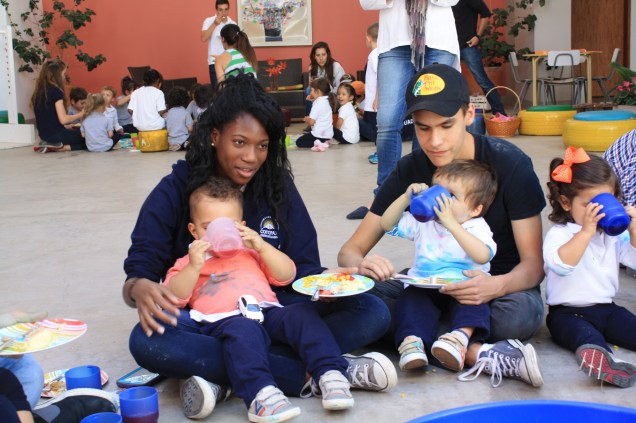
Thursday was an absolutely amazing day for me as an educator and as an Academia Cotopaxi community member.  From the beginning of the day right through until I fell into a turkey induced night of sleep, I was riding a high of joy and thankfulness.  Our community came together for a beautiful and impressive day of gratitude and celebration.  It was inspiring to say the least.

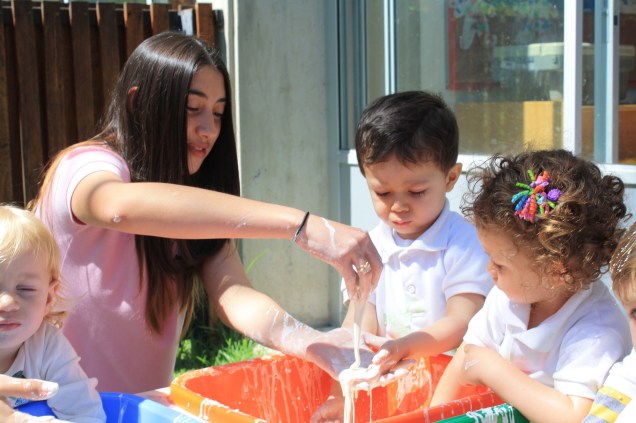
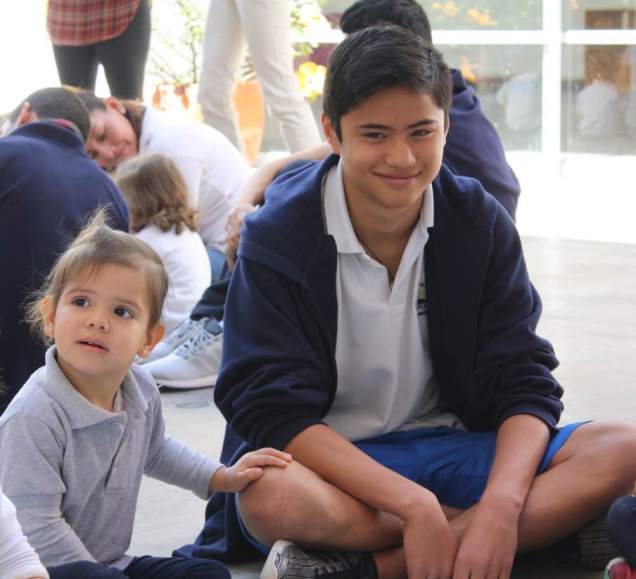
A while back a few of us had the idea to create Cougar Buddies and match our older students with younger classrooms for the sake of building community and sharing in each other’s learning.  On Thursday we saw this vision become a reality in many inspiring ways, some unprecedented in this community.  Stories of our older kids working with our younger students have spread all over campus and, even better, those older students are telling stories of how they were inspired by the younger kids!

It was a little bittersweet for me because I missed all of the amazing interactions that were happening here on campus.  However, missing those interactions was more than made up for because I accompanied our amazing 9th grade class to IMAGINE Valley for a morning of giving thanks and play.

IMG_4722.JPG

I’m not sure I’ve been able to find the words to adequately describe the amazing experience that was had by every single person on that campus yesterday.  From our 9th graders to the IMAGINE students and on to the teachers and staff who were able to witness the sights and sounds of pure joy…it was flat out amazing!

IMG_4696.JPG

In the four years since our IMAGINE Valley campus has been open we have never managed to get students down there to visit.  This 9th grade group was the first assembly of AC students to make the trip.  When we left, we had to pull some of those 9th graders away kicking and screaming…they had fallen in love within minutes of our arrival.

IMG_4659.JPG

To see the way our high school students so quickly got involved and, literally, got their hands dirty was truly a beautiful experience.

IMG_4368.JPG

The tears from IMAGINE Valley students when we had to leave was evidence that our impact was felt during the short stay on their campus.  Equally obvious was the effect those kids had on our 9th graders as the whole bus ride back to school was filled with positive emotions and requests to return to the valley for more opportunities to interact.

pickerimage.jpg

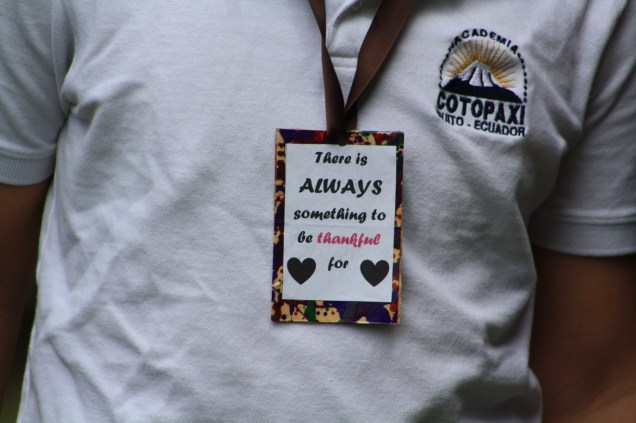
This year’s Thanksgiving experience gave me a lot to be thankful for on that day in particular.  However, there is a lot that I am thankful for day in and day out at AC.  The staff, students, and families who comprise this wonderful community make being a member of the Academia Cotopaxi family an absolute honor.  Thanksgiving was evidence of the power of this community to come together and create such an amazing and beautiful experience for our students.

IMG_4749.JPG

Thank you to everyone who plays a part in making this community so awesome.  Whether support staff, student, teacher, or parent, everyone is important to making Academia Cotopaxi the wonderful place it has become.  Thank you!!!

Learn In Community – In Action

Last week I wrote about how impressive our students proved to be as representatives of our community during the CAISSA volleyball tournament.  The honor of hosting a tournament like that brings tremendous responsibility as well.  Many families at our school hosted visiting students from other schools at their homes and teachers hosted coaches as well.  Our host families gave more than just a bed to these guests; picking them up and dropping them at the airport at all hours of the night, preparing meals, doing laundry, and making them feel welcome in their homes.  In eight years of international school experience this was the first time I’ve been a part of the homestay culture and I couldn’t have been more impressed with the outcome!  

Sometimes when you’re in a place or at a school for a while, be it 3 months or 3 years, you tend to overlook some of the amazing things that are happening all around you.  I, for one, have finally stopped looking around in the morning and saying “look at those mountains!” It’s hard not to appreciate the absolute natural beauty that surrounds me as I look out the windows and make my way to school, but having been here just over three months I have my moments where I take these things for granted.  The weather is gorgeous and looking out at mountains will never get old for me, I need to keep appreciating that view!  As a number of the visiting coaches mentioned, this is perfect weather and it doesn’t get any better than this.  A lot of visitors commented about how lucky we were to have such a beautiful setting for our school and they’re right, it’s gorgeous.

Beyond the weather and the natural beauty of Ecuador, I spoke at length with a number of coaches about a variety of topics having to do with living and working internationally; every time we came back to how good we have it here in Quito!  During CAISSA we had visitors from Venezuela, Dominican Republic, and Trinidad and Tobago.  I promise that I’m not exaggerating when I say, everyone that I spoke to was jealous of different aspects of our school and lifestyles!  We’re all very lucky to have found ourselves in such a beautiful place with a school community as positive and supportive as ours.

I could go on for days about all the positive comments I heard about our sports facilities, the views of the mountains (we had a very clear night and could see Cayambe from the north side of Campo Alegre), the ability to go to a grocery store and buy pretty much anything we wanted, the adopt-a-team initiative, the housing options we are afforded here in Quito, our wonderful pep-band and much more.  Our community shined bright last weekend and I want to share just one brief story about how we are living our message, #LearnInCommunity.

We invited the visiting coaches to join us for our full faculty social and they couldn’t have felt more welcome.  All day on Saturday I had coaches coming up to comment about how it only took a few minutes before our community was inviting them into conversations, games, and just making them feel a part of the group.  One guest in particular told me that he was now at his fourth international school and he had never seen a community that was as warm and open as ours, he was simply astonished at how he felt welcomed by every single person he met.  This is something that I’ve come to take for granted in my short time here at AC, it’s become such a part of our culture that I don’t even realize it any more…we are a family and everyone is part of the group, it’s awesome!!!  We truly are living the message – Learn In Community!

Thank you everybody for the amazing community that has been established here at AC.  Every single one of you is a part of the awesomeness and as a new member of this community I am honored to have been welcomed so warmly.  Our guests last weekend reminded me of just how lucky we are to be here at Academia Cotopaxi surrounded by such a tremendous group of people and a beautiful country.