Trying to Place the Roosevelt Innovation Academy in Context

The first thing I have to say is that if you haven’t read or listened to my colleagues reflections from Day 1, do it…now!  What an amazing group of educators, and the level of thinkers that have joined us on this adventure at Academia Cotopaxi is down right phenomenal!   

Today I went to the preconference led by the amazing team behind the Roosevelt Innovation Academy.  Again, wow, what an inspiring group of educators.  This group has reimagined what education can look like, they’ve inspired kids and the results are out of this world.  We were lucky enough to speak directly with a handful of students from the IA and it was rewarding to say the least.  We spent the morning learning about the program and sharing in some of the results…the CrepeZ cart was absolutely yum-tastic!!  

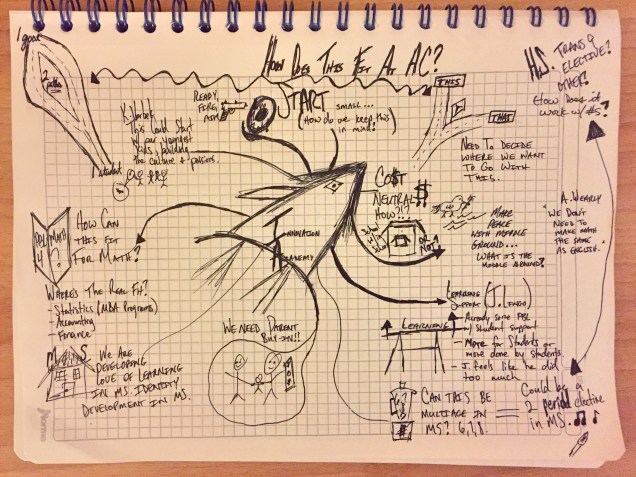
Charged with reflection for our collaborative learning blog I decided to try something different this week.  Visiting FDR is exciting for me for many reasons, one of which is that my good friend Michelle Juhasz works here as an Associate Principal.   A few years ago I sat with her at an EARCOS conference in Thailand, she took notes in a mind-mapping style.  I was intrigued but haven’t been motivated to try until now.  So, here is my mind map for today.  I actually did two, which I’ll explain further…
IMG_3730.JPG

This is the second “mind-map” that I made.  The first was what we were “taught” about the IA.  This one comes from a discussion we had as a group of AC colleagues at the end of the day.  We talked about how this (the IA) could work in our context.  With people from every corner of AC involved in the conversation you can see it went in a lot of directions.  The IA is in the center, a rocket ship blasting off into the future.  My drawings are lame attempts at art but they help me visualize the ideas.

Have a look…what do you take away from my mind-map?

How You’re Changing the World

Why do we put ourselves through it all?  The long hours, the stress, the students who “don’t listen”, and all the thankless effort.  Our students are with us for a year, maybe two, and then they move on to some other teacher – sometimes at a completely different school on the other side of the world.  We invest our blood, sweat, and tears and see very little in the way of immediate returns.  Of course, we see them grow, we see the progress as they become better writers, mathematicians, artists, scientists – and for many of us that is enough, we can sit back at night with a glass of wine and know that we’ve made a difference in the world and improved our students’ lives.  

A common story in my hometown was that kids went to college and came back to the area with a comfortable job and happy life.  You’d bump into your fifth grade teacher at the grocery store and explain to YOUR kids that, “this was daddy’s teacher when he was in fifth grade.”  I’m sure that still happens in good old Waukesha, Wisconsin but in the world of international teaching it’s pretty rare to just bump into your former students.

So thank goodness for the internet, it allows us to stay connected to friends, family, and former colleagues and students all over the world.  We’re able to “bump into” our former students as they do amazing things.  In 10+ years I’ve met, taught, and coached an awful lot of students from all parts of the world, literally – Texas, Italy, China and now Ecuador.  Every once in awhile, seemingly when I need it the most, the world sends me a message.  I want to share a couple with you to give you a taste of some of the things YOUR former students are doing out in the world.  These two young adults are certainly special but they aren’t unique, they represent their peers.

I taught Xien during my first year as a teacher in Houston, Texas while I was there through Teach For America.  For almost 10 years he and I had been out of contact, until Facebook recommended us to be “friends”.  As soon as we connected, Xien shared an article with me.  He has become a successful programmer while studying at Texas Southern University.  Some of the work he’s done while working in a summer internship has helped NASA, incredible stuff.  Xien is literally changing the world.

This morning as I was still half asleep I was scrolling through Twitter and the #Learning2 hashtag when I saw this video.  The Learning2 conference (coming to Quito in October) is happening right now at the American School of Milan, where I formerly taught 5th grade.  As I was scrolling down I saw the name of one of my former students mentioned in a Tweet, turns out she presented a TED-style talk at the opening of the conference.  It was AMAZING.  She stood up at an educational conference and told everyone what was wrong with the current educational model of stressing students out and “unbalancing” them during their high school years.  Brilliant.  

These are just two small examples of some of the amazing things our students get themselves into after they leave our classrooms.  Whether you teach Pre-K, fifth grade, or high school your students are going on to do amazing things.  What you’re doing right now might just be the driver for their success.  What you’re doing with these kids today may, literally, help them change the world in the future!  

Today could be the day you change someone’s life forever…are you ready?

Any Given School Day

Inside my sports analogy-prone mind I was thinking recently about how our profession is like a sports season.  The thing about school is that every school day is game day, we come to play five days a week all ‘season’ long.  But what is our role in this ‘game’?  As I’ve suggested in the past I see us as the coaches, managers, and motivational speakers.  We’re the ones that help determine the outcome of the game through our planning, leadership, and support of our ‘players’, the students.  Former commissioner of the NFL, Bert Bell, once said that “On any given Sunday, and team in the NFL can beat any other team.”  The phrase “any given Sunday” has come to be a rallying call for coaches in all sports – essentially saying, we can do this if we put our minds to it.  I’ve been thinking about “any given Sunday” and what implications this has for education if we consider it as “any given school day” instead.

Any Given School Day  

Working with people of any age is sure to lead to the unexpected and often times the unusual.  Working with kids leads to even more unplanned events, emotions, and behaviors.  Those things all come into play each and every day.  Very often it is how we (as the adults) respond that dictates the success (or not) of the learning opportunity presented.  This is how we have to look at the unexpected, as learning  opportunities (or teaching opportunities).

Any given school day a student may arrive tired, sad, giddy, angry, excited, hungry, nervous, or any of a very wide range of mindsets.  Now, multiply that times as many students as you encounter on a daily basis and you’re facing a daunting task indeed!  However, we manage it, don’t we?  Our students feel comfortable and safe when they are here at school.  Our teachers, counselors, staff, and admin do an awesome job of welcoming students to share and seek guidance when needed.  The environment at school is safe and welcoming, our students want to be here and enjoy coming to school.  The smiles, laughter, and overall positive behaviors of our students prove that fact.  Any given school day our students know they can count on the positivity and support that comes with a great school environment, a definite win for them!

Pay it On

Our students face so many variables in their life that they don’t even realize how much they are up against.  As adults we face just as much, if not more than our students.  However, as adults we’ve learned mechanisms to cope with all of these different things that impact our life.  These are skills we’ve learned over the years and serve us well as we negotiate all of the potential land mines that life has to offer.  Our students on the other hand, well they just haven’t had the experiences needed to develop all of these tools.  Surely many of the lessons we’ve learned came from the important adults in our life…it’s been paid forward, now it’s our time to pay it on for our students.

Understanding the challenges our students face as they grow and journey through life is as important a skill as any.  There will certainly be times when a situation arises that we aren’t prepared to deal with – that is when we have to remember that this is a team game.  As responsible adults we know that we can’t do everything alone, after all it takes a village to raise a child.  We have tremendous resources here at school and even outside of our walls.  If you encounter a difficult situation, you can be sure that there is a strong team available to support in any way necessary.  Just as our students come to school every day knowing that they have a safe and caring team ready to support them, we should all know that the same it true for us.

It’s Game Day

As I mentioned at the beginning, every day is game day at school.  We come prepared to meet our students wherever they may be.  Sometimes that means we differentiate academically but many times it means that we are experiencing a different version of the same student we saw yesterday.  It can be a frustrating process to deal with all the different ups and downs that our students go through.  It is most certainly exhausting riding the tidal waves of emotions that can be experienced by teenagers.  And it most certainly takes patience and skill to navigate the turbulent waters of middle and high school.  Thankfully, for our students’ sake, we have expert educators with vast amounts of experience and skill to help them confront life’s challenges as they work to become the successful students we all believe they can be.  

Any given school day, any student can overcome any challenge they face!

5 Ways to Engage Young Readers

It seems like yesterday that I was coming to the end of my first year of teaching and finally starting to figure a few things out about what it meant to engage young readers.  My first teaching job was a Teach For America assignment at Youngblood Intermediate School in Alief ISD, on the southwest side of Houston, Texas.  My 6th grade Language Arts classes were a diverse mix of cultures, all low socio-economic, and almost all “non-readers”.  I worked hard to change that and turn them into“readers”.  They grew an average of almost two grade levels in reading during their 6th grade year – but how?

At the time I didn’t know what I was doing, I had no idea really.  I was flying by the seat of my pants and existing on a steady diet of trial-and-error.  I worked closely with another teacher who taught 5th grade in the same school.  We lived in the same apartment complex and carpooled to work most days, the 30 minute drive gave us lots of time to debate possible strategies for engaging our young students.  Here are, in MY order of importance, 5 of the most successful and easy to use ways to engage young readers that we came up with:

Build a Classroom Library 

This sounds obvious, I mean what Language Arts teacher doesn’t know that?  I agree, it’s obvious, but I’m shocked by how many classrooms I walk into that have little to no so semblance of a classroom library (ALL classrooms should have a library, non-LA teachers don’t need a huge collection but should have something).  At the end of my two years working at Youngblood I had almost 500 unique titles and they were being regularly read (unlike some classroom libraries that collect dust).  A successful classroom library will include engaging titles and books that excite the readers in the room.  I will write more on how I created such my classroom library (I was up to 1000 books before I moved to China and left them behind) in another post.  For now…start building your classroom library, no matter what subject you teach!!!  

  • Bonus tip:  Even when my library was huge I still went to the school library and checked out 20-25 higher level (but short) nonfiction books that remained in the classroom.  Lots of kids liked to read these once in awhile.  I tried to find those that connected to current units in Science, Math, SS, Art, etc.

Set the Expectation and Then MODEL  

This is the old “walk the walk” thing.  It’s so simple, yet so effective.  You can’t just tell kids to read and then go grade papers, you need to give them time to read in the classroom (more on this later) and sit down and read alongside of them.  This is prime time to really learn the young adult genre (more on this later too) with it’s ever-growing amount of fantastic books.  When your kids see that you’re reading Harry Potter (that’s where I started since I had never read them) they’ll want to try it too!  When it’s time to read, pick up a YA book and join the fun!

Develop a System for Accountability

This one is tricky, very.  I’ve seen everything from the very basic reading log to independent book projects to Accelerated Reader (AR).  While at Youngblood I used our AR system and set a required minimum of points.  It took a lot of oversight for the kids who tried to game the system but in the end it worked well and the “gamers” eventually realized it’d be easier just to read then beat me at their game 🙂  The reason accountability for “reading for enjoyment” is so tricky is because you don’t want to create a disincentive to read.  If kids start thinking, “Oh man, I have to write a book report at the end of this book” then they aren’t going to want to read very often.  The beautiful thing about AR was that it provided a comprehension quiz for hundreds of thousands of books, kids who could pass these quizzes at an acceptable rate demonstrated that they had read and understood a certain book.  The quizzes were relatively painless (if they read and understood the book) and kids accumulated points with which they earned certificates and medals.  I also took quizzes and accumulated points, there were two or three kids each year who would out read me!  Of course we did plenty of independent reading projects but the AR system allowed kids to read at any rate they’d like without being slowed down by big book reports or projects every time they read a book.

Build Endurance  

I didn’t realize this had happened until long after I left Alief but I’m 100% confident that it helped my students develop into “readers” and, as a bonus, played a part in the success my students saw on their standardized test scores.  Start the year expecting kids to be focused and reading in class for no more than 10 minutes at a time, every day.  After a couple weeks of successfully reading 10 minutes each day, extend the time.  Push them until they are reading 20-30 minutes with no problem (depending on the age group, this shouldn’t take more than 3-4 weeks if things are going well).  Since I had no idea what I was doing, when my kids begged for more time to read, I would let them (especially on Fridays and any day after our standardized test season had ended).  We had gotten to a point at the end of the year where all 35 kids could read for an hour straight without anyone losing focus…it was simply amazing and all totally achieved by luck!  I strongly believe that their increased stamina for reading paid off in the way of extremely impressive standardized test scores.  These tests can take 3-4 hours, and for some kids upwards of 6 hours.  My kids did really well, not just on the reading but on the math too!  My students, because they’d built stamina while reading for enjoyment, were able to focus for longer periods of time and thus excel on their standardized tests that year.  More importantly, this stamina also allowed them to take books home and reading for hours at a time each night…much better than most of the alternatives!  

Learn the Young Adult Genre 

It was all Beverly Cleary and Where the Red Fern Grows when I was a kid.  Not much variety to choose from.  Today…wow…there is no shortage of absolutely fantastic YA literature available.  I wouldn’t recommend reading a whole series (unless you’re really into it) as it will eat up your valuable reading time.  Reading the first book in a series gives you plenty of insight as to what to expect.  Being able to recommend books to kids based on personal reading experience is one of the most valuable tools for engaging kids.  I strongly believe that all it takes is one great book and you’re able to hook even the most reluctant reader.  Push outside of your comfort zone.  Reading Twilight was one of the best things I did for expanding my horizons.  It was brutal for a 20-something such as myself but it allowed me to understand what so many of my students were excited about, then I just needed to find more like it.  This brings me to one of the most important tips, talk to your students and learn about what they’re reading.  I can’t tell you how many times I read a book because it was recommended by a student…I read things like Twilight because of student recommendations and they almost always wound up as the most popular selections.

All of this takes time but, frankly, it’s time you can’t afford to spend any other way.  Engaging our young readers is one of the most challenging (and important) things we do as educators.  Some students come in already hooked, thank you parents, but they still need their teacher to push them and expand their horizons.  The strategies listed above take time and effort but in the end they are all relatively easy in the long range scheme of things.  Enjoy the process and, even better, enjoy watching your students blossom as young readers!


A Cinderella Story for Every Student

cinderella-bracketAs I mentioned a couple weeks ago, it’s March Madness and I can’t get enough of it!!  Last night while I was watching eight straight hours of basketball 🙂 I was contemplating how these games related to my day-to-day life.  I think inspiration hit as the second 12 seed of the night upset a 5 seed, in double overtime none the less.  The Trojans of small University of Arkansas-Little Rock upset a Big Ten team (Purdue) and they did it in an impressive fashion…one that got me thinking about some of our students and how we reach them.

There are a few different types of teams in the NCAA tournament and they all approach their situation differently.  Their coaches approach the games differently based on the team they have fielded in a particular year.  The fans have different attitudes about the team based on the relative strength of the players and how well they work together, as do their opponents.  The approach for each player, team and coach is situational.  It varies from season to season and game to game, it can even vary from minute to minute in certain games.  The same is true about our students and how we approach their education, flexibility is key.

A lot of people might call the Trojans or any other low-seeded team a “Cinderella story” or the “underdogs”.  However, the fact of the matter is that all of the teams in these tournaments are capable of winning any given game at any given time.  I won’t argue the fact that odds are long for some of these teams to be successful in some of these situations (for example a 16 seed has never, in the history of the NCAA tournament beaten a 1 seed).  However, just because the odds are long doesn’t mean that these teams don’t show up and try to win the game…THAT has never happened, the 16 seeds always show up for the game and they always give 100%.

The players/teams step on the floor and work to be successful, except for when they don’t.  It’s true, sometimes players/teams aren’t totally focused and their effort isn’t at the level necessary for success.  When this happens the coach needs to get involved.  Depending on the coach and situation, this can look very different – from screaming and hollering to quiet and calm words of encouragement.  The coach is responsible for their team’s performance and when they’re not living up to expectations the coach needs to get involved.

Coaches for the low seeds more often than not need to build confidence in a team that doesn’t necessarily have a realistic shot at winning the championship.  However, what kind of coach would they be if they just showed up and said, “Well, we’re going to lose, so have fun and take it easy tonight…don’t work too hard!”  Even with a team that faces long odds, coaches show up with a well thought out game plan, in game strategy, and motivational speeches ready to prepare their team for a shot at success.  The game changes for coaches who have better teams, or rather teams who face better odds.  It’s a different perspective but the same goals apply, lead your team to success.

Last night was a perfect example of the success achievable by an “underdog” who has a good plan, works hard, and never gives up.  Arkansas-Little Rock was a heavy betting underdog before the game but it didn’t take long for Trojan fans to start believing their team could possibly win that game.  They fought, tooth and nail, for a full 40 minutes (a full regulation game) and made a crazy hard shot to tie the game and head to overtime.  There was no let-down in the extra period, and in fact, they continued to play hard into the second overtime period of the game.  Eventually their hard work and patience wore down a much more (on paper) talented team and the 12 seeded Trojans upset a 5 seed.  It’s become a classic story in NCAA tournament history, the 12 seed beating the 5 seed, it happens every year.  These hard working teams who are considered underdogs by many come out on top and achieve the success many thought was impossible…we’ve got these students too, a lot of them.  Kids who face long odds but are willing to work (sometimes with proper motivation) to achieve the success that many believe they will never reach.  What kind of game plans, strategies, and motivational tactics are needed to help these students reach success?

Then you have the “favorites”, the top level achievers who’ve been successful all year and have reached the tournament with lots of praise coming at them from all levels.  They should win it all, they should be the ones setting the pace, outscoring every other team and just plain embarrassing the lesser teams.  However, as is so often the case, it doesn’t always go to plan.  The top seeds lose to teams they probably “shouldn’t” lose to.  They come out flat, they aren’t motivated, and they let opportunities pass them by.  Is it a lack of preparation?  Are their coaches overlooking the current opponent?  Are the players overlooking the opponent?  I’m sure there are lots of reasons why the “favorites” don’t always succeed.  Malcolm Gladwell will tell you that sometimes they get stuck in their routines and don’t adapt to the situation, they’re not flexible.  The classic “David and Goliath” situation happens all too often.  Overconfidence, unwillingness to adapt, sitting back in the comfort zone, and ego all play a part.  We have these students too…how do we ensure that they don’t fall into these traps?  

What can we do to make sure that EVERY student is working as hard as the “underdog” and ends with their own personal “Cinderella story”?  We’ve got every one of these students, in every class we teach.  The “favorites” who are (perhaps) overconfident, the middle seeds who see a chance but know that hard work is needed, and the “underdogs” who may believe they are doomed to fail.  How can we bring the mindsets of all of these different types of teams/students together?  What’s the magic recipe that gets every kid to have the confidence of the “favorite”, the work ethic of the middle seed, and the will and determination to overcome like the “underdog”?  

We’re the coaches…it’s our task to identify the skills of our players and bring out the best in each and every one of them to help them achieve the success that they deserve.  It’s March Madness year round for educators and frankly, I love it!  

One of the most famous and inspiring coaches of all time, Jim Valvano said it best, “Don’t give up, don’t ever give up!”  Watch his extremely famous speech at the ESPY Awards here, awesome stuff.

Thanks for being the best “coach” possible for our students!!
Book Review: Rigor in Your Schools: A Toolkit for Leaders

My second book review will be published in the near future.  Here is a sneak peak of my review of Rigor in Your School: A Toolkit for Leaders.  Other book reviews can be seen here.

Rigor in Your School: A Toolkit for Leaders

Ronald Williamson and Barbara R. Blackburn

Routledge, 2013

Reviewed by Bret Olson

There aren’t many schools in the world who aren’t looking to improve and grow.  Often times the focus of school growth is centered around the idea of creating a more rigorous academic environment for student learning.  Every school leader aims to increase the learning capacity of their students but the question is, how?

Rigor in Your School: A Toolkit for Leaders is the third book in a series on rigor by Williamson and Blackburn.  Having focused on strategies for teachers in their first book and school leaders in their second, this author duo heard the cry from school leaders for more tools and examples to draw from.  The result is Rigor in Your School: A Toolkit for Leaders, which acts as a step by step guide to increasing rigor in your school.

Creating a Vision

Every school has a mission and vision, they are at the heart of what we do as educational institutions.  Williamson and Blackburn believe strongly that in order to create change toward a culture of rigor you must start with a vision.  Walking you through the steps (as they do with every aspect of this process) of creating a personal vision starts you on a journey of exploration and self-reflection that will guide your understanding of how rigor can be built within your personal context.  Rigor doesn’t happen overnight, nor does change.  Understanding the change process and the time it takes to be successful is crucial to successfully creating a more rigorous environment; Williamson and Blackburn provide a strong explanation of how to create this plan.

Tools, Tools, and More Tools

Williamson and Blackburn clearly set out to provide strategies and resources for school leaders to use as they work to implement change toward rigor.  The description of this book as a “toolkit” couldn’t be more accurate.  You can’t go more than two or three pages without being given another example of a useful tool.  Without a doubt, if you’re looking for specific and useful strategies and resources for creating a culture of rigor in your school then look no further than Rigor in Your School: A Toolkit for Leaders.  

Change Takes Time

These authors are very clear to share throughout this book that change doesn’t happen quickly.  When reading this book, if you’re expecting a “quick fix” solution you’ll most likely be frustrated or overwhelmed.  Williamson and Blackburn never purport to have a magic spell for creating a more rigorous school.  However, if you’re willing and able to dedicate the time and effort necessary to achieve a long-term goal then this book can lead the way.  Working chapter by chapter, the authors walk the reader through the entire change process and what is required along the way.  In addition, the strategies and tools provided will allow you to focus on the task at hand without spending time to invent your own resources.  Reading this book won’t provide you “the answer” but rather it will provide you a roadmap for success; it’s your responsibility to apply the lessons and tools provided to reach your goal of a more rigorous academic climate.

A Rigorous Route to Rigor  

Many books provide theories, philosophies, and mandates for change but do little to provide the necessary help for achieving success.  Rigor in Your School: A Toolkit for Leaders comes ready made for those who desire change but need assistance in developing and implementing a plan for something so important as increasing rigor in a school.  With myriad resources and tools to guide school leaders toward a more rigorous school, there is something here for everyone looking to make a change.  Whether you aim to follow through with a long term plan or you’re looking for simple tools for a shorter term target, Rigor in Your School: A Toolkit for Leaders provides school leaders with a wealth of knowledge and resources.

Bret is an Associate Principal at Academia Cotopaxi, a school for children of international families living in Quito, Ecuador.  Previously, Bret worked as a Vice Principal in Shanghai, China and taught elementary in Milan, Italy.  Bret was a Teach For America corps member in Houston, Texas prior to moving overseas.  Bret earned his B.A at the University of Wisconsin-Madison and M. Ed. at Lehigh University, studying Educational Leadership.  Bret shares his educational thoughts via his professional website and on Twitter @The1sWhoDo.

Planning for Success

The Fine Arts Festival this past week was a tremendous display of the awesomeness that we have here at AC.  Our students, teachers, and staff did an amazing job of sharing the learning that is happening in the arts each and every day.  From music to arts to drama, it was an amazing display of the wonderful work being done in the arts.

One of the highlights of the Fine Arts Festival (one of the many) was the drama performances happening each day.  At the end of day one I heard a lot of people talking about the amazing 9th and 10th grade drama performance, I knew I couldn’t miss it!  The reviews were spot on, the production of The Curious Incident of the Dog in the Nighttime was impressive beyond my expectations.  More importantly perhaps is that I learned something from this performance, or rather I made a big connection to something I’ve been thinking about a lot recently.

Christopher, the main character in this story has, as is stated by the book jacket, a “condition”.  Throughout the scenes in this performance Chris finds his own way from a small town outside of London into the big city using the train.  The “condition” Christopher learns to manage in his life is unnamed in this performance/book but it appears similar to Asperger Syndrome or a high-functioning version of Autism.  My learning doesn’t come from the details of Chris’ character but I beleive the background knowledge helps provide understanding for my connections.

See, Chris has a lot of trouble making his way in the world.  Certain tasks that could be simple for you or I might be extremely scary or difficult for someone like Chris.  However, he manages to accomplish his goals, but how?  Well, Chris has strategies, steps that he takes to meet his goals.  Sometimes his goals are as seemingly easy as crossing a busy courtyard to reach a ticket office or cash machine.  Chris considers the challenge, stops and assesses his plan/strategies, and moves successfully into action…left, right, left right.

All of us had the privilege of attending TTT on Friday and the takeaways were many.  We walked away with all sorts of new ideas, strategies, and tools.  Perhaps you gathered so many great ideas that thinking about implementing them when you get back to your classes seems overwhelming.  Perhaps it’s like Chris in the metro station; it’s loud, intimidating, and scary.  However, you CAN work those strategies into your practice…it requires the strategies (which you now have) and a plan to carefully and successfully infuse them into your work.

Whenever we have a big undertaking ahead of us, whether it’s Chris getting to London, rewriting a thematic unit to be more student centered, or leading a shift in school culture, it takes time and a carefully thought out plan to successfully achieve your goal.  Chris needed some special tools, things that he knew worked for him but may not have been helpful to the rest of us…what are your special tools for success?

Where do you want to go and where are you standing?

Now, how will you get there?

March Madness

It’s finally March, by far my favorite month of the year…it’s March Madness!!  For those of you who aren’t sure about what that means, it’s the end of the college basketball season in USA.  As the season finishes there are league tournaments and then the big end of the year tournament to determine the National Champion.  For basketball fans it doesn’t get any better than this, the unpredictability of the tournaments creates a sense of ‘madness’ and hence the name…it’s awesome!  What does that have to do with education though??

This season my team, the University of Wisconsin Badgers, were off to a rough start.  Last year the played in the championship game (they lost unfortunately) and lost a lot of players to graduation and leaving to play in the NBA.  This season started off poorly, they lost to teams they had no business losing too.  Then, out of the blue, right in the middle of the season their legendary coach decided to retire.  He left a team who was already struggling to his long-time assistant coach and said ‘good luck’.  It was a recipe for disaster in almost everyone’s eyes.

Except there was one person in particular who believed that success was still possible…the new head coach.  The season isn’t over yet but at this point we’ve already seen an incredible turn around.  The team who started out by losing most of it’s early games has won 11 of their last 12 games and is set to finish in the top three in their league…simply amazing!  So how did they do it?

It all started with their new coach.  He went back to basics, he literally went back to the foundation.  Stories came out about how the coach brought bricks into the locker room.  Each player took one and wrote a word or phrase about what they could do to help the team.  Words like “selfless”, “heart”, and “leader” were shared.  These bricks were then placed in the locker room, a sign of the foundation that this team would stand on for their renewed effort for the season ahead.  The idea was that you can’t build anything with just one brick and if you try to build with missing pieces then your results won’t stand.  Basketball is a team game and the brick foundation is as true an analogy as any…no one can do it alone, we all need to work together.

At the end of the first semester I wrote about how it takes a village to raise a child, it couldn’t be more true.  I think the brick foundation analogy works well with that African proverb.  Together we can achieve our goals, as a department team, as a division, as a school…team work is the key to achieving our biggest goals.

We have an amazing team here at AC.  The amount of experience, knowledge, and energy that we’ve pulled together to guide our students toward success is absolutely astonishing.  Every student at this school can benefit from the collective effort of the amazing faculty and staff.  To ensure this success we need to come together to form an indestructible team.  Maybe the 80’s were just filled with so much teamwork brainwash material (Voltron, Thundercats, Ghostbusters) that I can’t help but feel that coming together as a team is the solution to all the world’s problems…perhaps it’s just my optimistic attitude 🙂  Either way, I’m confident that teamwork is the way to go.

I know many of you work closely with your department teams and other colleagues.  It’s a busy and stressful time of year for all of us.  Take care of yourself, find your balance, and ensure that your teammates are well cared for as well.  Success for the remainder of the year lies in us coming together as the dynamic and talented team that we are.  It’s never too late to stop and reevaluate the foundation…what word would you write on your brick?

What 6th Graders Know, That We (Adults) Have Forgotten

This past week I spent four days with the 6th graders on their “Week Without Walls” trip.  Being outdoors, in the fresh air and away from the day-to-day rhythm that life naturally falls into gave me a great chance to step back and think about a lot of things.  While most of my time was occupied by 30 11-year olds, I also had the chance to be inspired on a number of occasions by these dynamic pre-teens.

Believe it or not, one of the most inspiring moments of the trip came thanks to some good old fashioned 6th grade dramatics.  In brief, a couple kids were “in a fight”, there was a misunderstanding that had blown out of proportion because each side felt they were right.  After a long mediation session each of these young adults was able to see the other’s perspective.  They resolved, for the future, to better communicate and seek to find a resolution before reaching such elevated levels of conflict.  At the end of the day this interaction could’ve been any two 6th graders, anywhere in the world…there was nothing particularly special about the interaction.  However, it seemed special at the time and it got me thinking…

Why is it so easy for our students (the younger ones in particular) to forgive and forget?  How do they so easily move on from such interactions?  After thinking about this and watching with a more focused eye, I think I saw some hints as to what might be the real secret – it comes down to their relationships and their flexibility.

One fact is simple, they’re malleable.  These young minds are fully aware that they, in fact, don’t know everything.  They can step back and admit that they were wrong or that they could’ve handled a situation better and they grow from it, they truly are reflective creatures (even if that doesn’t always seem to be the case!)  I often wonder, as we go along the road to adulthood, does this skill fade…do we become the “old dog” who can’t “learn new tricks”?  Or does our Mindset change as we age and, supposedly, grow wiser?

They’re empathetic as well.  It’s one thing to be malleable, but if you can’t see the other side then how can you grow?  It hit me like a ton of bricks how empathy just oozes out of these kids.  As adults I expect that many of these kids will brush off such “childish” issues in the future, but right now they have a superhuman ability to truly feel the emotions of their friends (and even sometimes their combatants).  This can prove difficult when ten kids are reacting to one friend’s pain/heartache/perceived injustice, but when it comes to conflict resolution this empathy is a true superpower!

Most importantly, however, these 6th graders know each other and they know each other well.  They’ve built relationships consistently for a long time (some of them for years).  Some are better friends and have more positive relationships than others but there is a certain level of understanding that exists amongst all of these kids.  They know each other’s secrets and they know each other’s buttons (and how to push them!)  As 6th graders, these kids are in the beginning stages of learning to interact successfully with their peers provided all of these new-found interpersonal insights.  For some it has opened doors, they’ve built their friend circle and are enjoying the fruits of such understandings.  The relationships they’ve built can withstand misunderstandings and “fights”.  These kids can fully engage in a disagreement, resolve the issues and go back to being best friends within minutes…it truly is a superpower.

As educators, and people in general, I believe that we have a lot to learn from these young minds.  While watching and learning from these mini-adults I realized I needed to work harder myself.  It dawned on me that I didn’t know these kids as well as some groups of kids I’ve worked with in the past.  I was forced to consider how this could impact my interactions with them.  Had I built up enough of a positive relationship with each of these kids?  Enough to withstand a difficult conversation and still come away with a mutual level of respect?  Since so many of my student interactions tend to be related to behavior or academic discipline I grew concerned.  Luckily I’ve been down this road and I feel confident in my ability to build relationships…I jumped right in and began connecting with students – it turned out to be the best part of my week!

How have you worked to connect with your students?  Have you built the level of relationship that is strong enough to withstand those difficult moments and come out the other side strong?

Take a step back and think about the relationships you’ve built…could they be strengthened?  I know I’ll be working hard to (re)connect with students over the coming weeks, especially those with whom my connections are weakest.  Building the positive couldn’t be more important and it’s never too late to jump in!

Learning From Experience

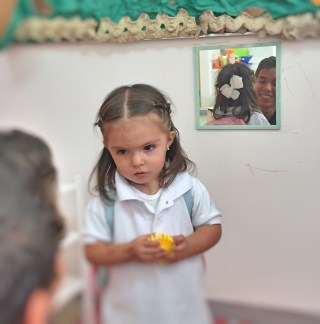
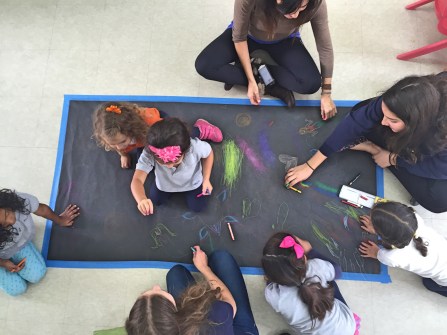
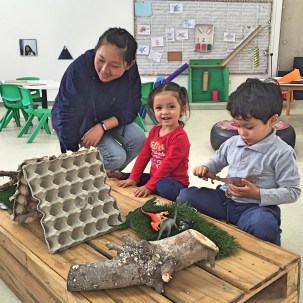
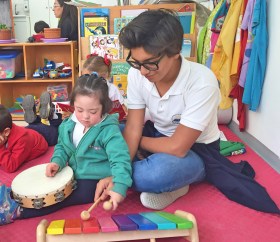
Monday was our second opportunity to engage in our Cougar Buddies program.  Once again it was an absolutely incredible experience!  Having enjoyed my trip to IMAGINE Valley with our 9th graders at Thanksgiving, there was no way that I was missing this second trip.  In our first visit I was blown away by the wonderfully positive interactions between our 9th graders and the IMAGINE Valley students.  On this trip something else hit me, the learning…

IMG_2969 2.JPG

When we first conceived of the idea of Cougar Buddies there was a buzz of energy in the room – what a great opportunity for us to build community at our school!  Connecting the Middle and High Schools with Early Childhood and IMAGINE, building relationships with students who wouldn’t normally interact…it was an exciting concept.  In our first Cougar Buddies, at Thanksgiving, we saw this excitement play out, our teachers loved it and more importantly our students loved it!  This experience was different, in a good way…actually it wasn’t different, so much as it was better – it was improved, it was deeper, it went beyond meeting new people, smiling, and having fun.

IMG_2971 2.JPG

In our first trip to IMAGINE I stood with Carolina Ulloa (one of the outstanding leaders of the IMAGINE programs) and we watched.  We watched as students met and engaged for the first time.  We watched as some 9th graders dove in and immediately developed meaningful relationships with their Cougar Buddies.  We watched as IMAGINE students joined the excitement with smiles and we watched as a few retreated in tears.  We watched as some of the 9th graders retreated (without the tears!) to a more comfortable distance; it was clear this was pushing their comfort zones.  It concerned me, I was disappointed seeing these “big kids” hold back.  However, being as amazing as she is, Carolina encouraged me to be patient.  “Give them time,” she said, “I’ve seen this before.  Some kids need to sit back and watch for a while before they jump in, that’s okay.”  She couldn’t have been more correct, our second visit proved that!

IMG_2984.JPG

Based on stories I’ve heard from teachers and students alike, the experience I’m describing wasn’t unique to the 9th graders visiting IMAGINE Valley.  This scene was playing out in classrooms all around our campus and what a beautiful scene it was.  Our second Cougar Buddies visit opened new doors, chances for those who sat back and watched during the first visit to wade in a little further and test the waters.  It was amazing!  

IMG_2983.JPG

Students who had previously been little more than a fly on the wall were now diving right in, playing, laughing, and enjoying the experience.  The pleads for more time with Cougar Buddies were repeated during this second visit.  The laughter and stories heard on the bus ride back to AC were filled with joy and happiness.  Our students, both young and old, have taken full advantage of the opportunities provided by our Cougar Buddies time.  

IMG_2970 2.JPG

Building the Academia Cotopaxi/IMAGINE community, #LearnInCommunity, was one of the main drivers in our initial planning of Cougar Buddies.  While that goal has certainly been achieved we’ve also seen incredible growth and learning come in just our second visit.  Many of our students don’t have siblings with such a large age difference, or siblings at all.  The experience of interacting, even just sitting down and playing together, is one that is new to many of our students.  What an incredible opportunity for them to step out of their comfort zones and face new challenges!  This was the best Cougar Buddies experience yet; with the awesome growth seen between visits one and two I have high hopes for the future of this initiative!!